Jiufen Old Street Photography
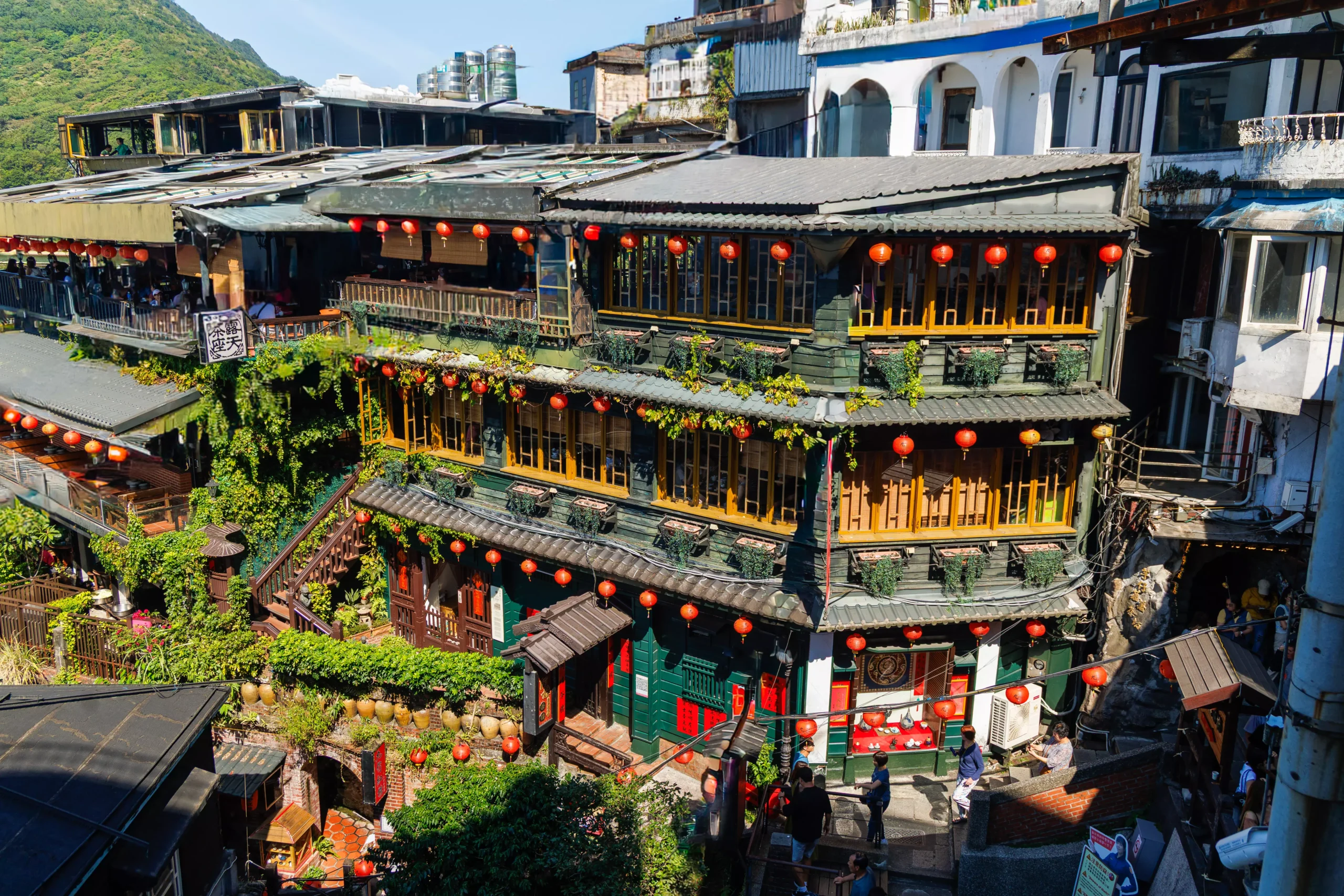
There is a shot of Jiufen that almost everyone has seen, even if they do not know where it is from. It's the teahouse with its tiers of wooden balconies, red lanterns hanging from every floor, the whole facade smothered in ivy and the green hills rising behind it. It has become one of the defining images of Taiwan, and arriving in Jiufen for the first time you have the strange experience of recognising a place you have never been.
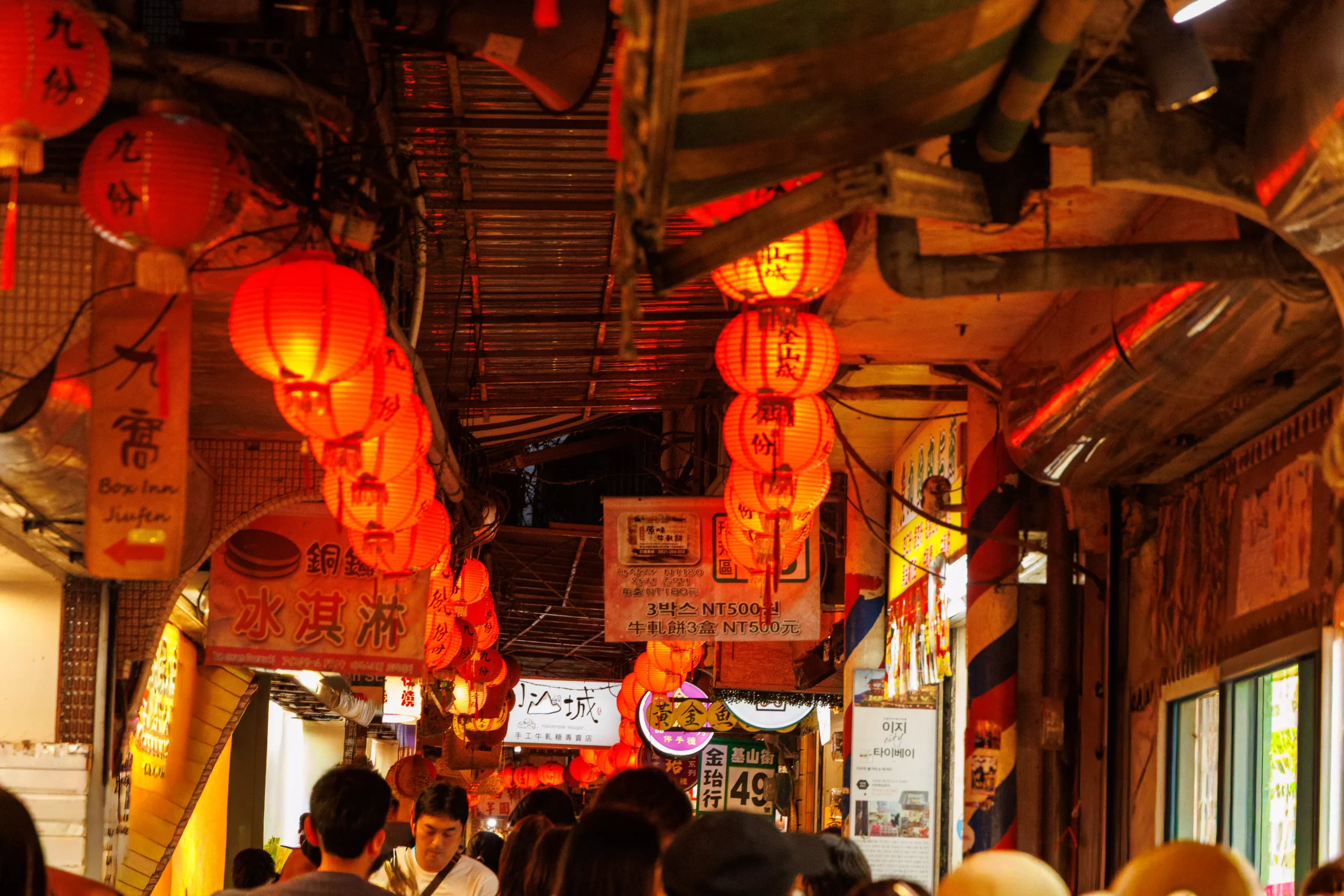
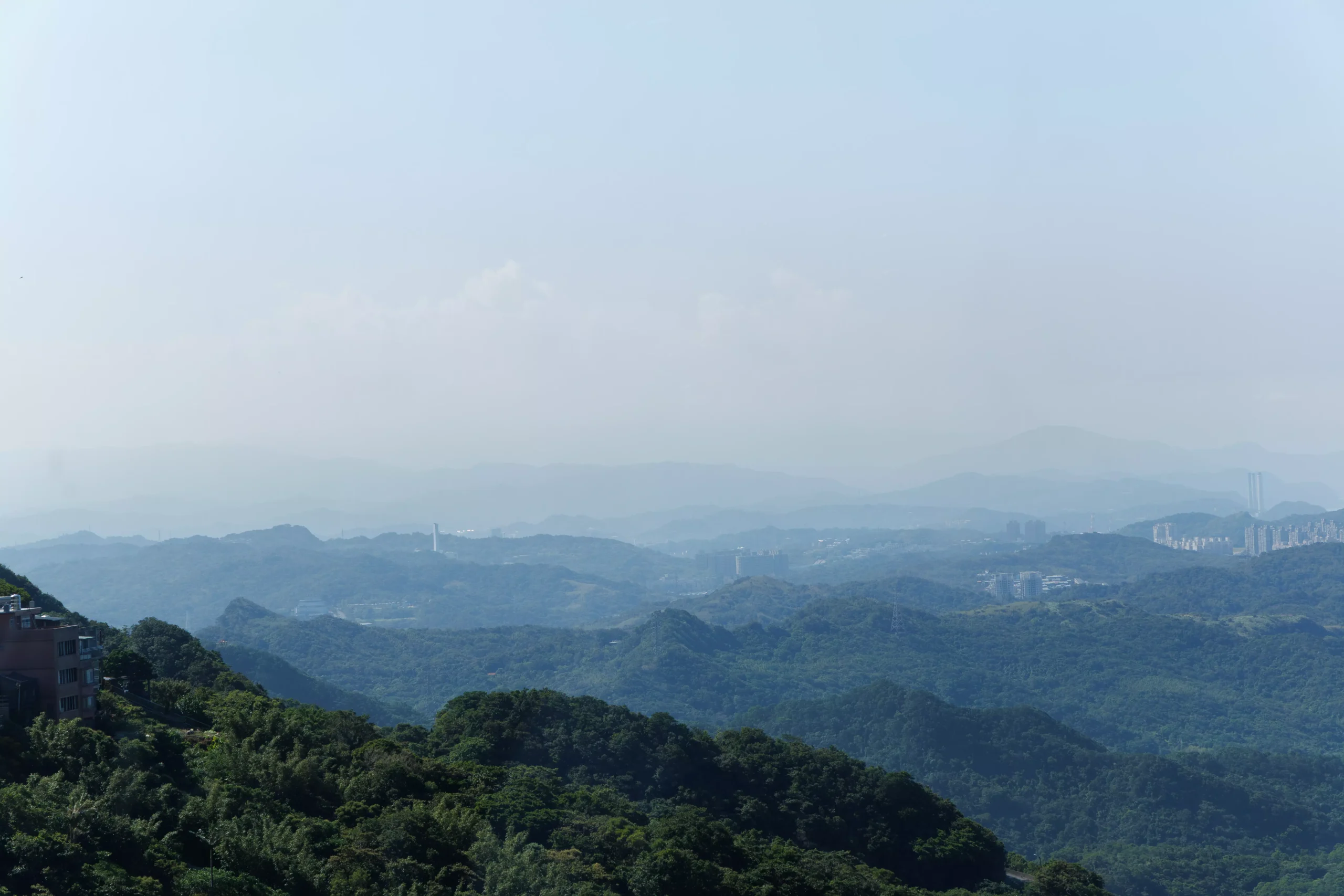
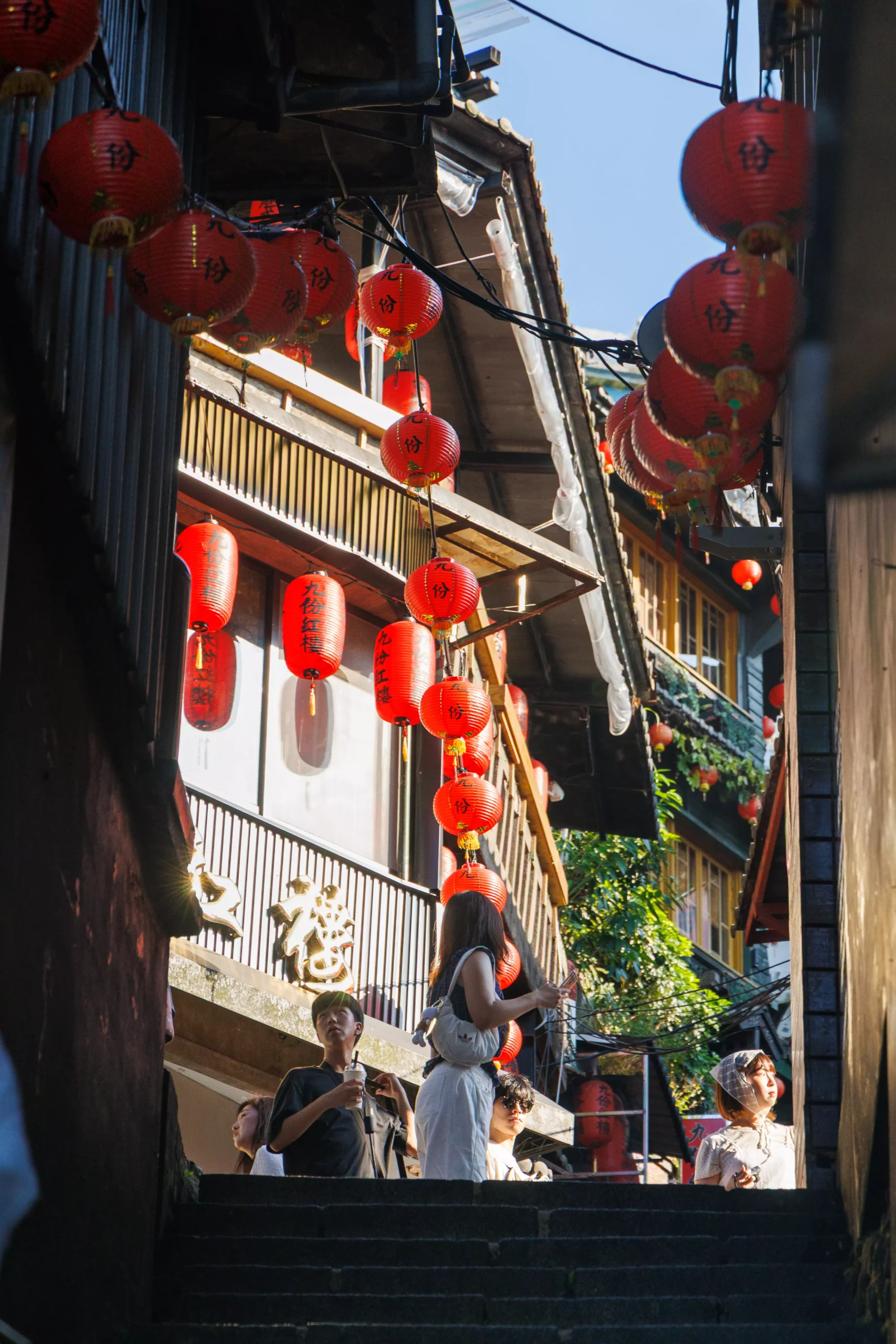
Getting there is part of the experience. The bus from Taipei winds up through increasingly dramatic hillside scenery until the town appears, clinging to the slope above the bay with the Pacific glittering below. The main street descends in steep steps from the bus stop, and those first steps down into the covered lantern alley are striking: the shift from bright hillside daylight into the warm, red-tinted glow of hundreds of paper lanterns overhead.
Jiufen works for photography at any time of day, in different ways. In the morning the crowds are thinner, the light on the building facades is softer and more directional, and the detail of the carved wooden architecture is easier to see. By afternoon the lanterns begin to glow more visibly against the light and the market fills up. By dusk it changes again: the red lantern light takes over completely and the village looks like a film set.
The teahouse that appears in almost every photograph of Jiufen is the Amei Teahouse complex, and it rewards time spent looking at it from different angles. From across the stepped alley you get the full facade with the lanterns and ivy. From below, looking up the wooden staircase towards the entrance, you get a more intimate view of the lanterns cascading down the right side of the stair. There is a small garden at the base of the staircase with bronze figurines half-hidden in the planting, and that detail is easy to miss if you are focused entirely on the main building above.
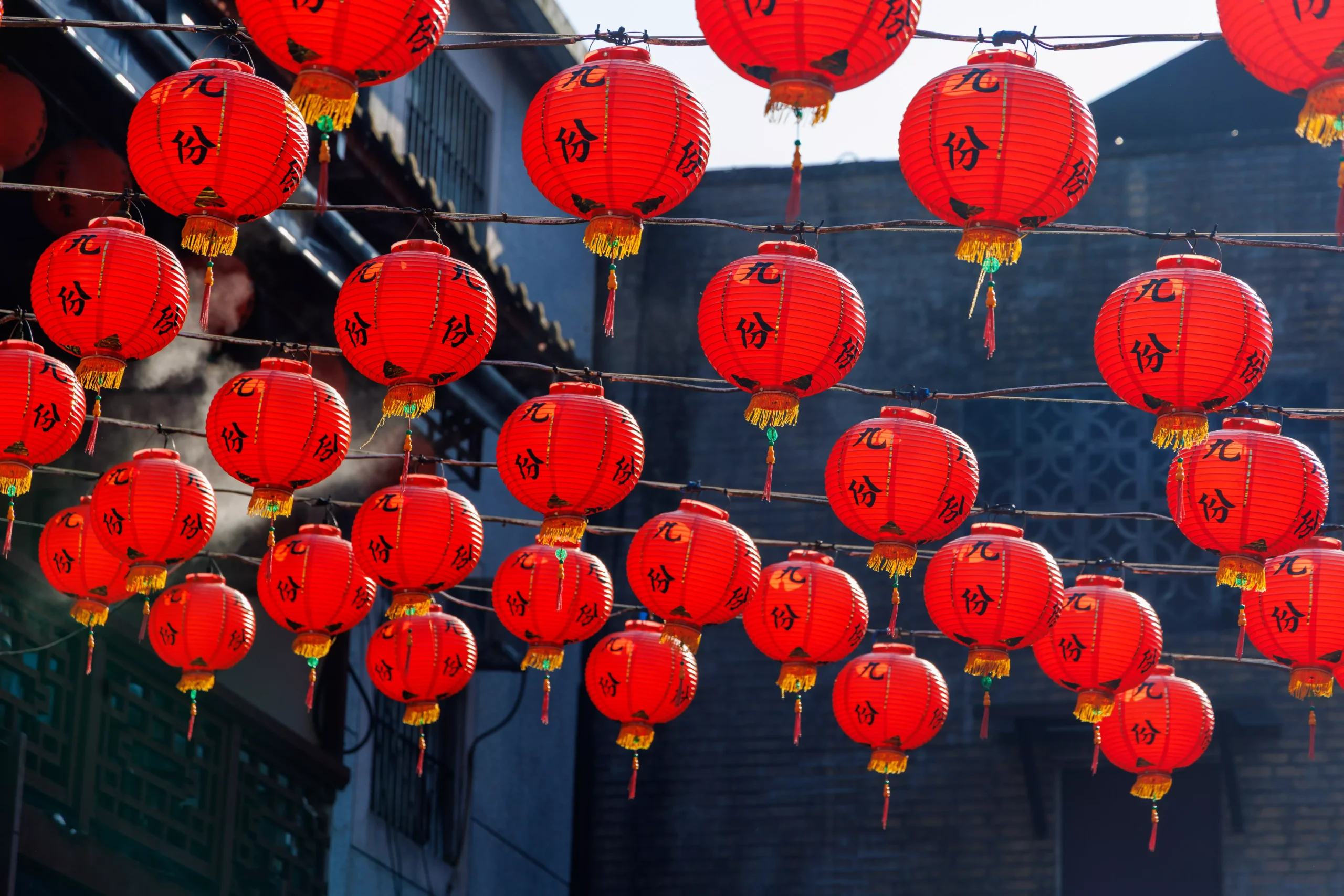
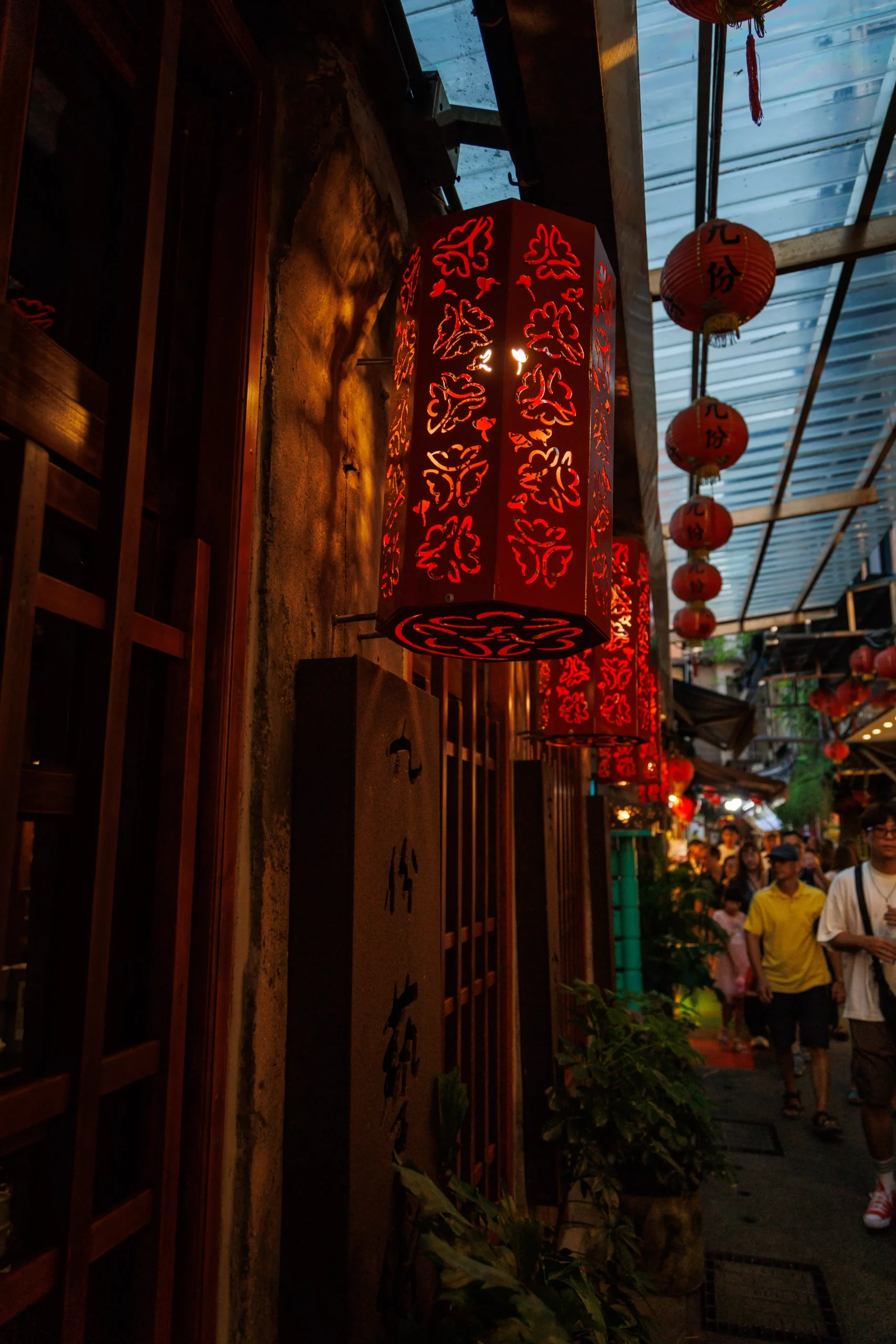
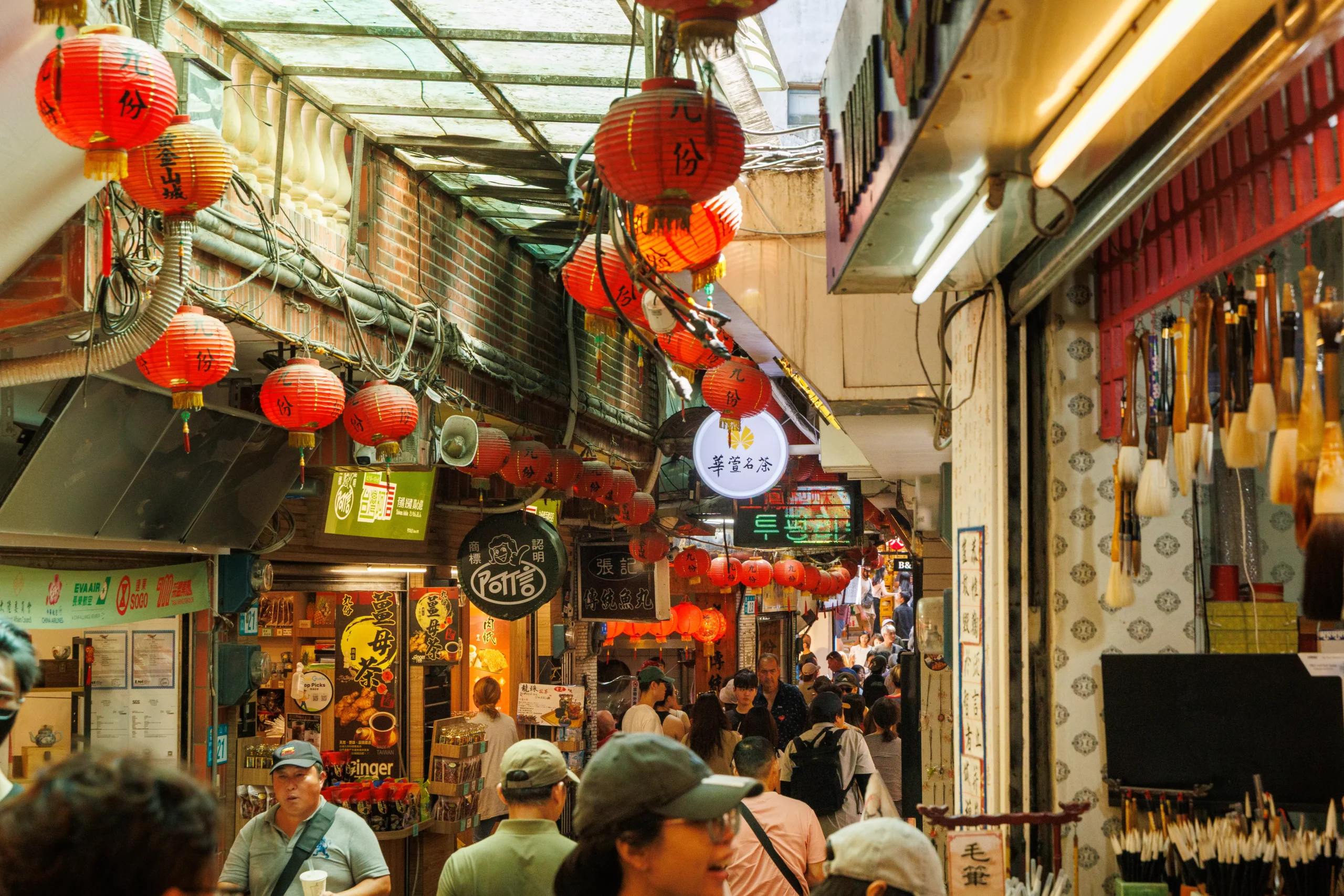
The lanterns themselves are worth photographing as a subject in their own right. The rows of red paper globes strung above the covered alleys in tight grids, the Chinese characters on each one reading Jiufen, catch the afternoon light in a way that makes the photographs look almost impossibly red and saturated. That is what they actually look like.
Away from the main alley there are quieter corners. Narrow lanes drop away from the main street towards the hillside below, and looking back up from them you get views of temple rooftops with the forested slope rising above and the sea visible through gaps between the buildings. They take longer to find, but I liked them more.
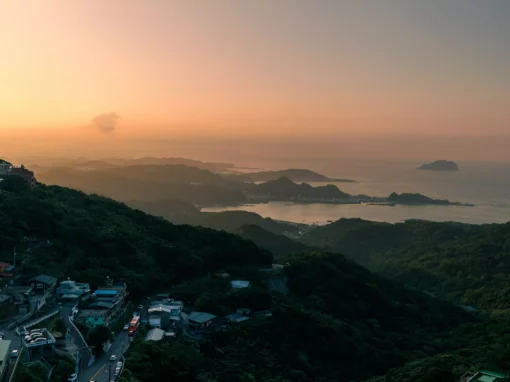
The view from above the village looking out over the bay is another side of Jiufen that is easy to miss if you stay on the main street. From the higher paths the Pacific stretches out to the horizon, the harbour and headlands of the northeast coast laid out below you, and on a clear afternoon the light on the water is extraordinary. We were there towards sunset and the whole bay turned gold.
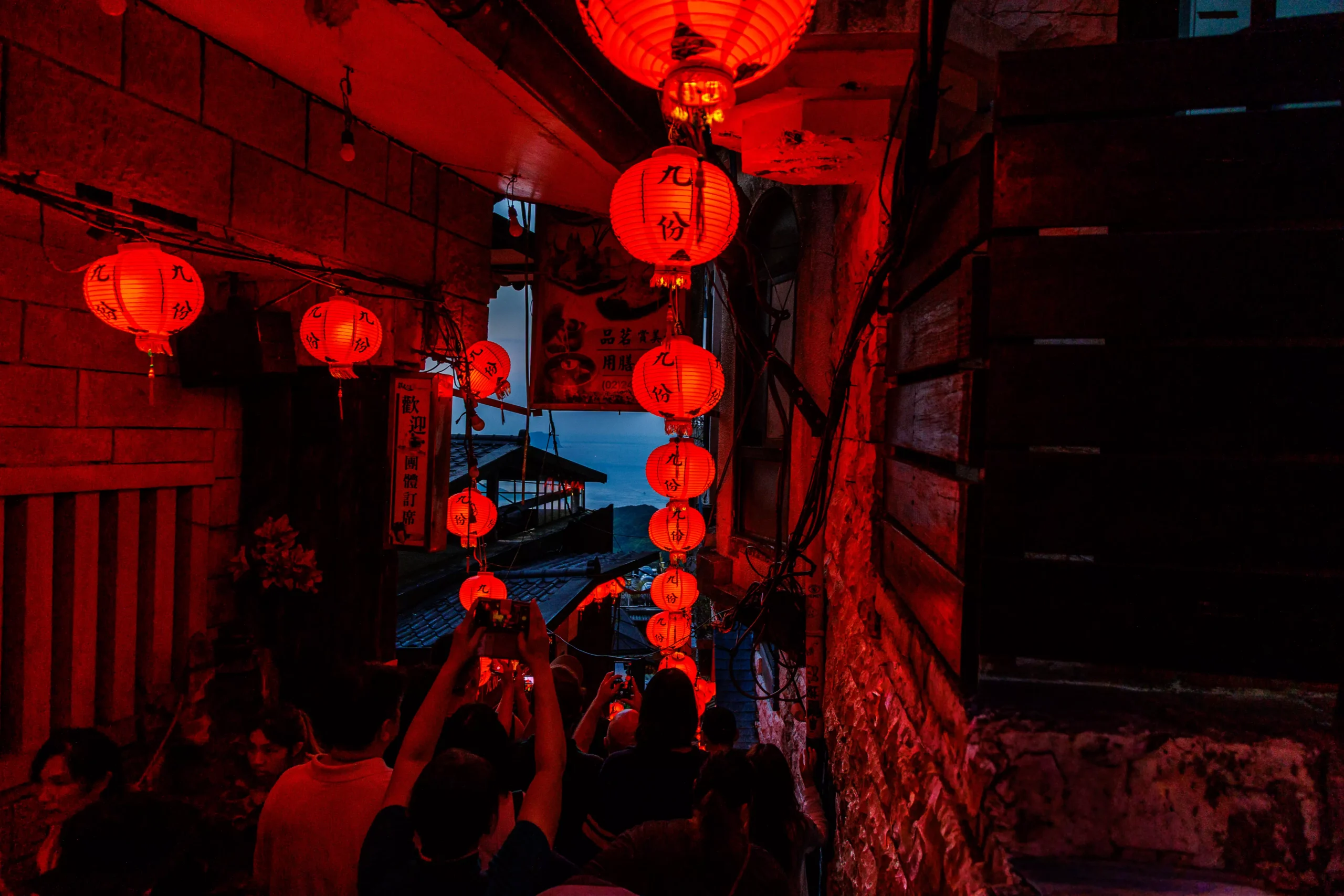
At night Jiufen becomes a different place entirely. The narrow alleys that feel busy but manageable in daylight fill up to the point where movement is slow and deliberate, and the lantern light is so pervasive that everything takes on a deep red cast. One of my favourite shots from the whole Taiwan trip came from standing in a side alley looking down through an arch of lanterns towards the gap at the far end, where the cool blue of the evening sky and the darker blue of the sea were just visible beyond the red glow. The contrast between the warm foreground and the cool distance, with the crowd silhouetted below the lanterns, is hard to plan for; I just stumbled into it while walking.
Jiufen is always busy, and it's better to work with the crowds than against them.