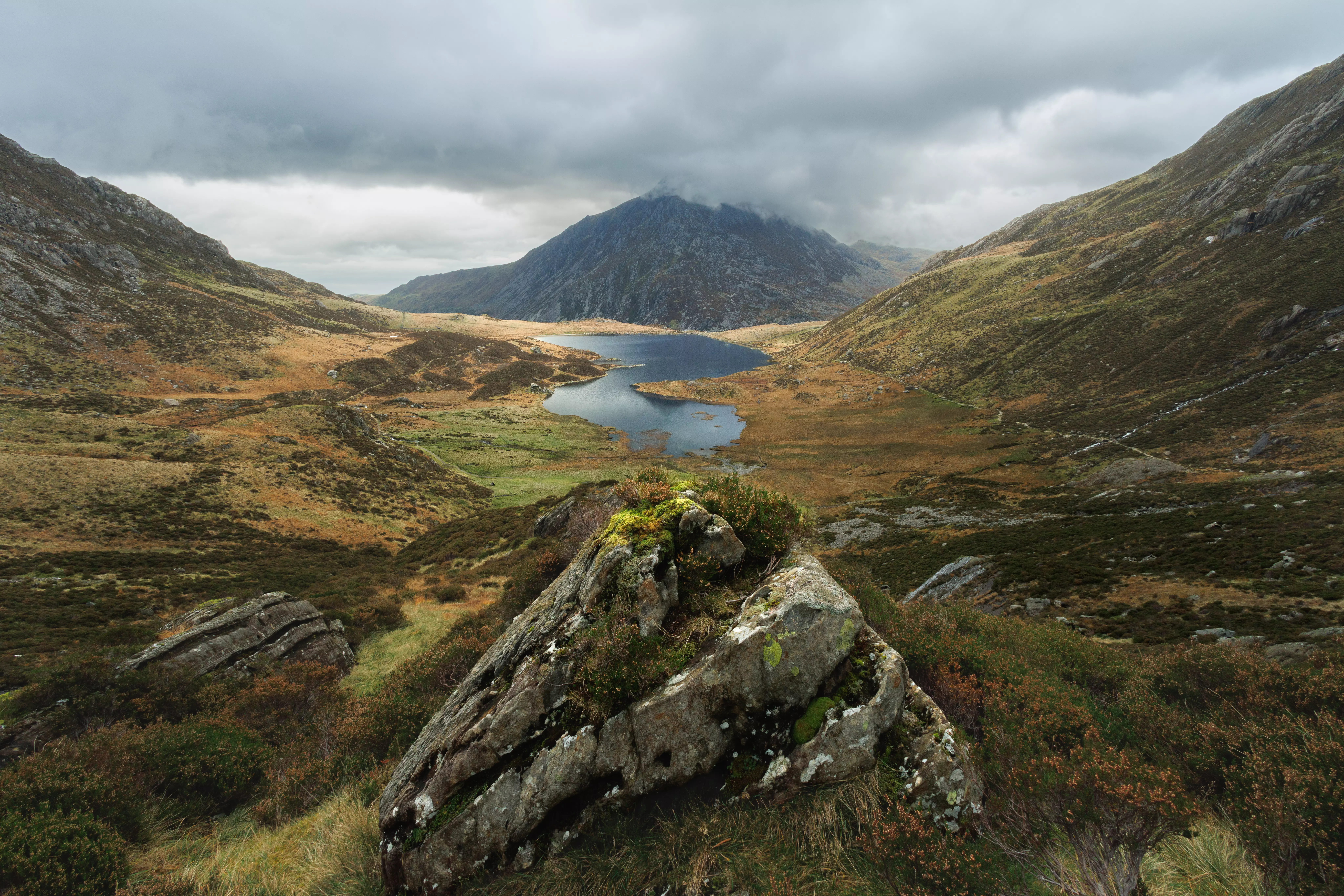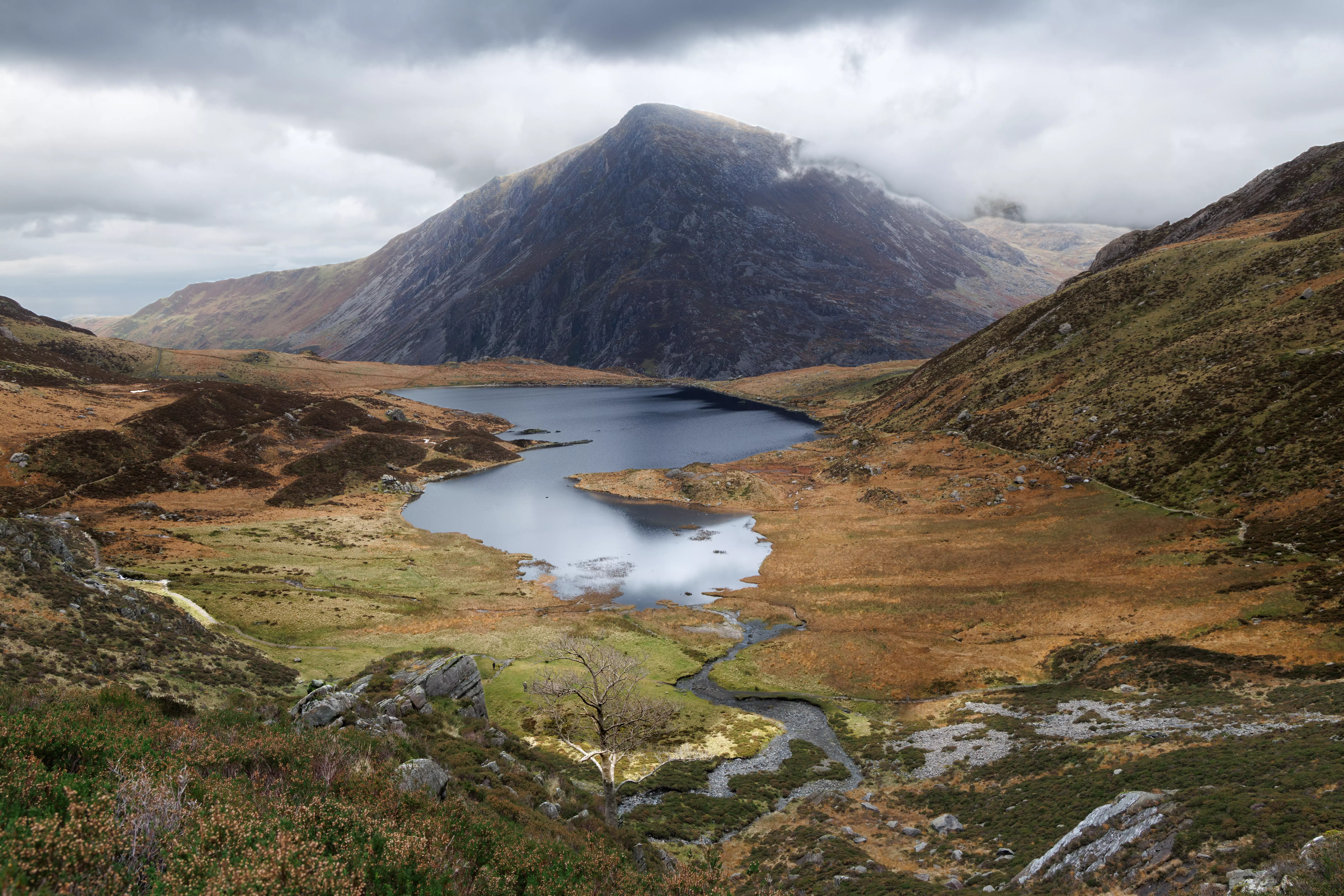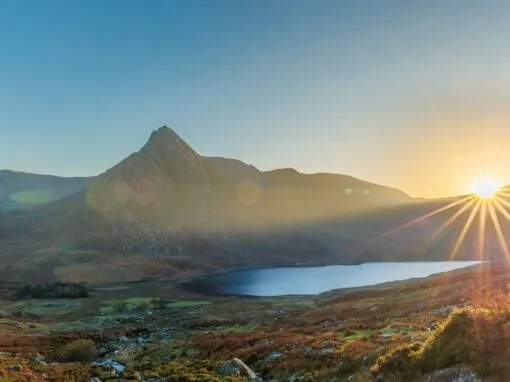
Photographing the Ogwen Valley was always going to mean standing in rain at some point. That's not a complaint. The Ogwen Valley in Snowdonia is one of those places that needs weather to come alive, and on the day I visited, it gave me everything: cloud, mist, waterfalls running white and full, a valley floor the colour of old copper, and as the light began to drop, a sky that turned the colour of embers.
The valley runs between the Carneddau and Glyderau ranges, with the A5 threading along its floor past Llyn Ogwen before the road drops down Nant Ffrancon towards Bethesda. It's a landscape shaped by ice: the classic U-shaped profile, the hanging valleys, the cwms scooped clean into the mountainsides. You feel that geology underfoot with every step. The rocks here are ancient and angular, nothing softened, everything still carrying the marks of what carved it.
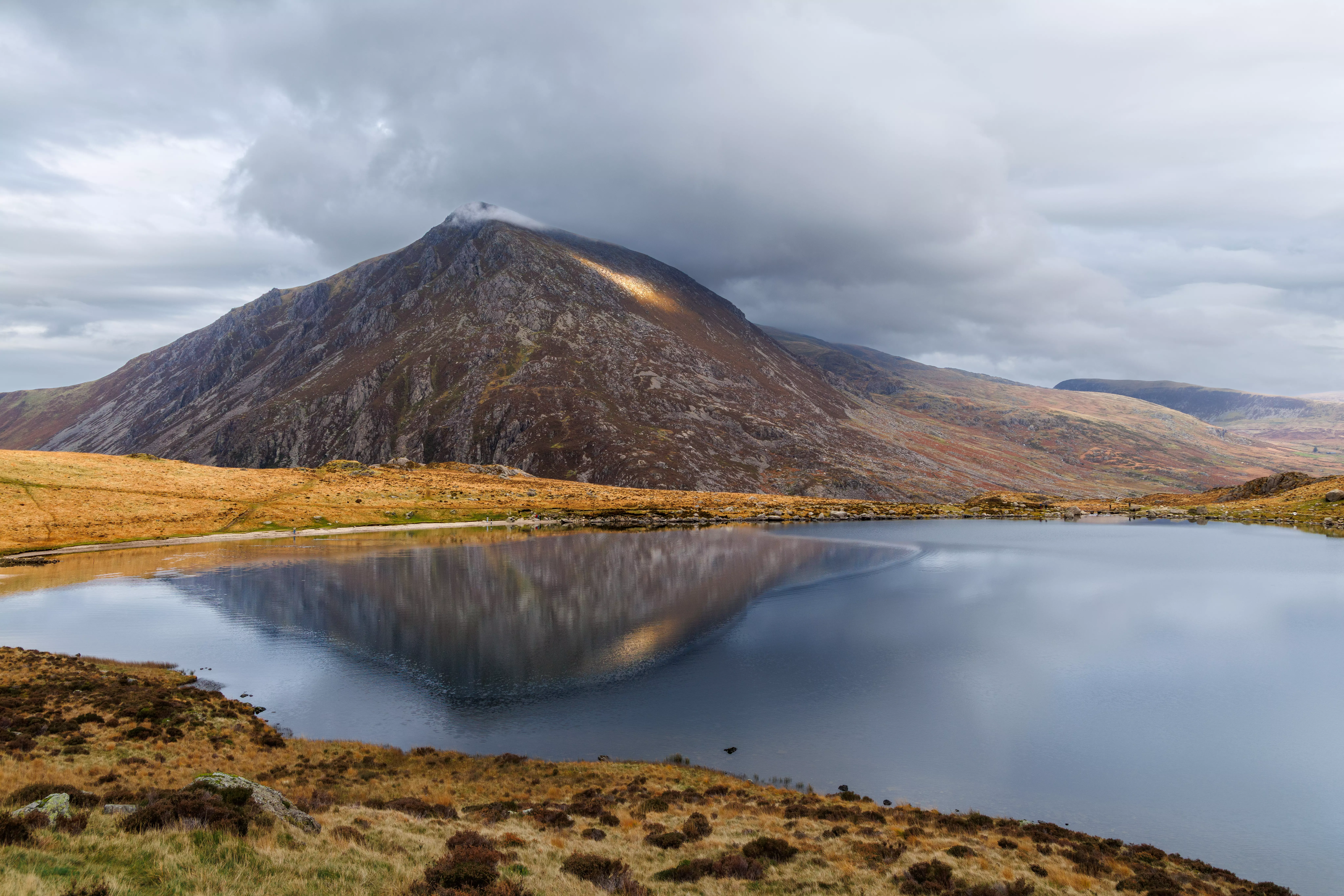
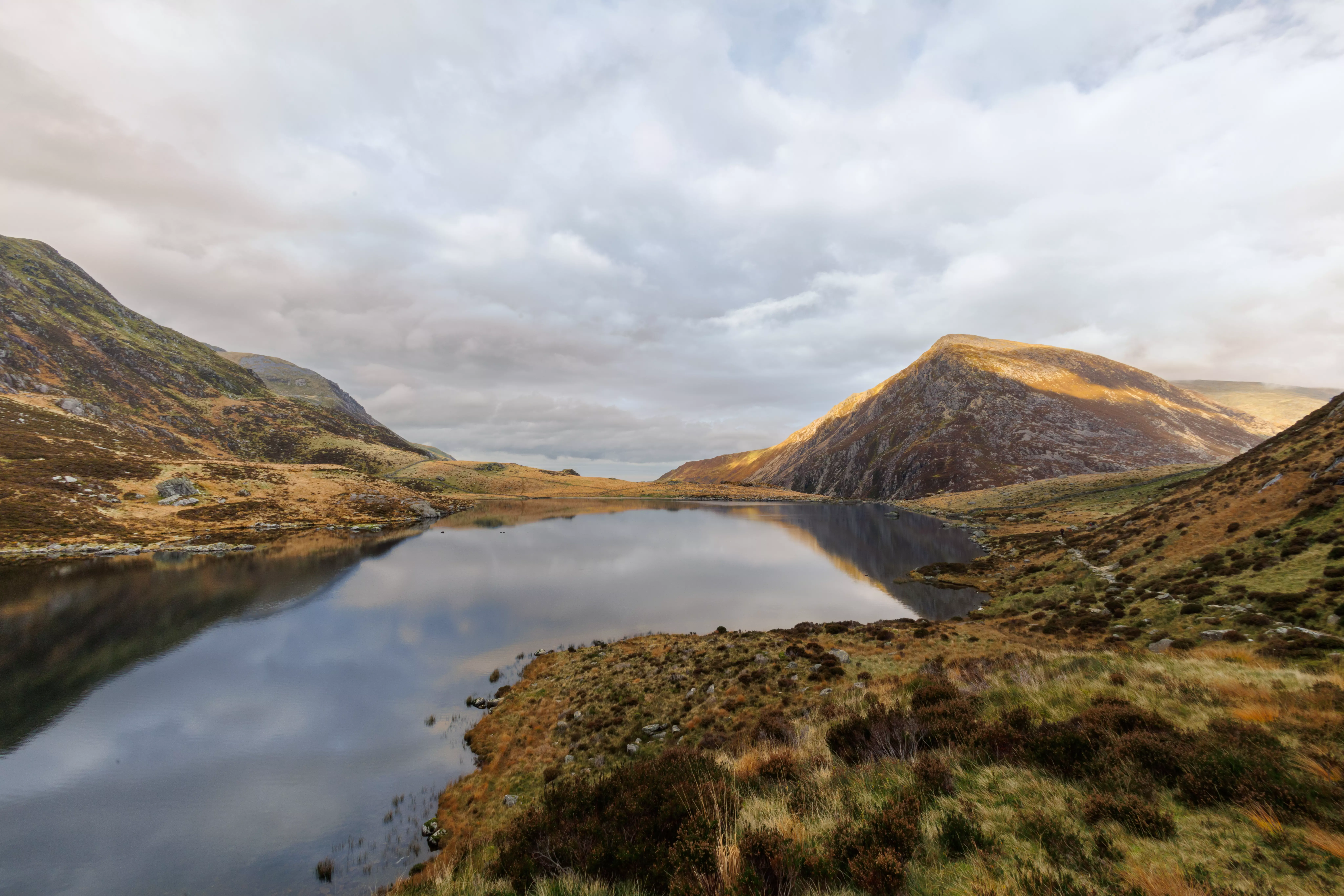
I started near the western end of Llyn Ogwen, where Pen yr Ole Wen drops almost directly into the water. The lake was calm enough to hold a perfect reflection of the summit ridge, with a single band of warm light cresting the top before cloud closed over it again. That window lasted maybe four minutes. The Ogwen Valley teaches you patience and readiness in roughly equal measure: the light moves fast here, and the cloud moves faster.
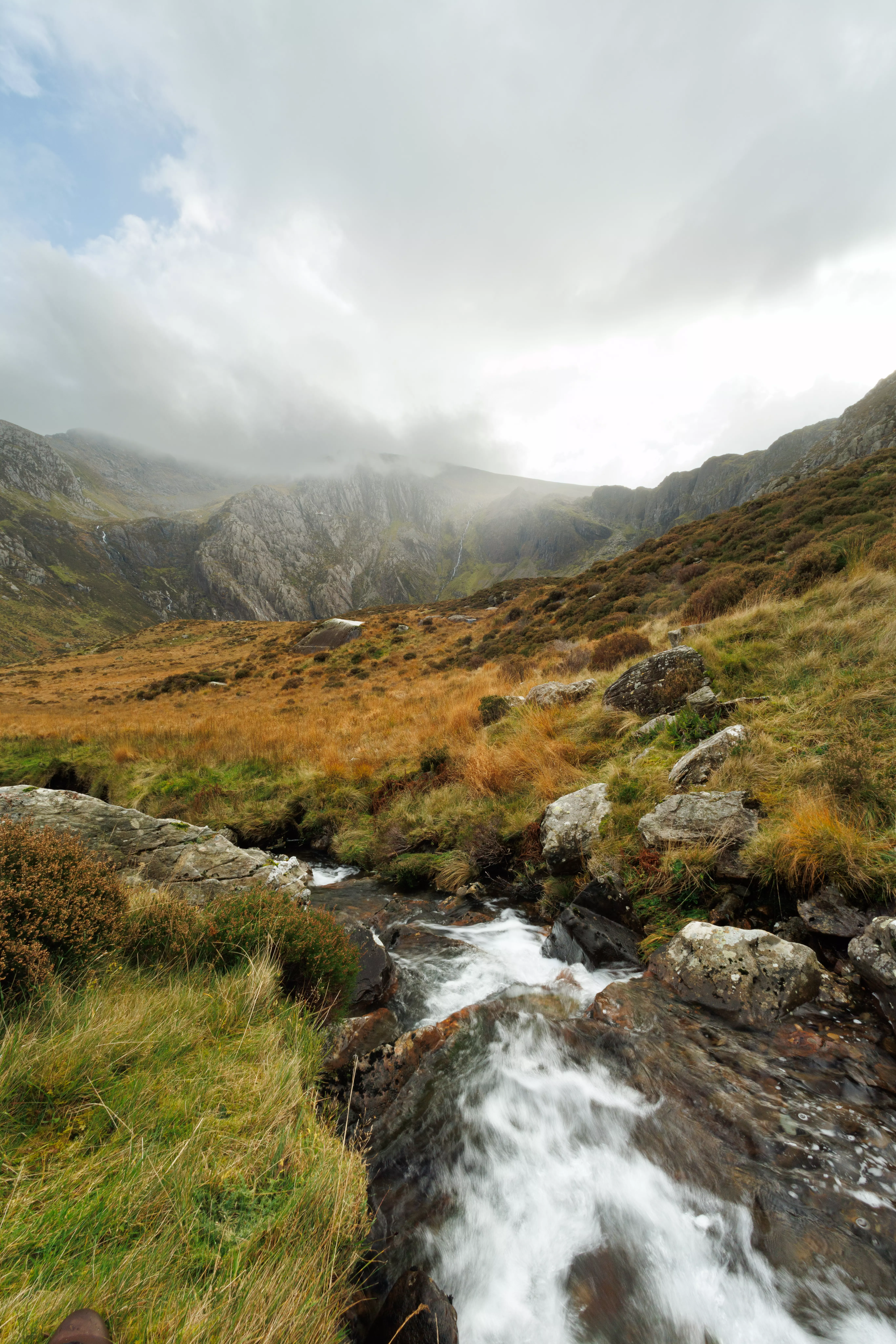
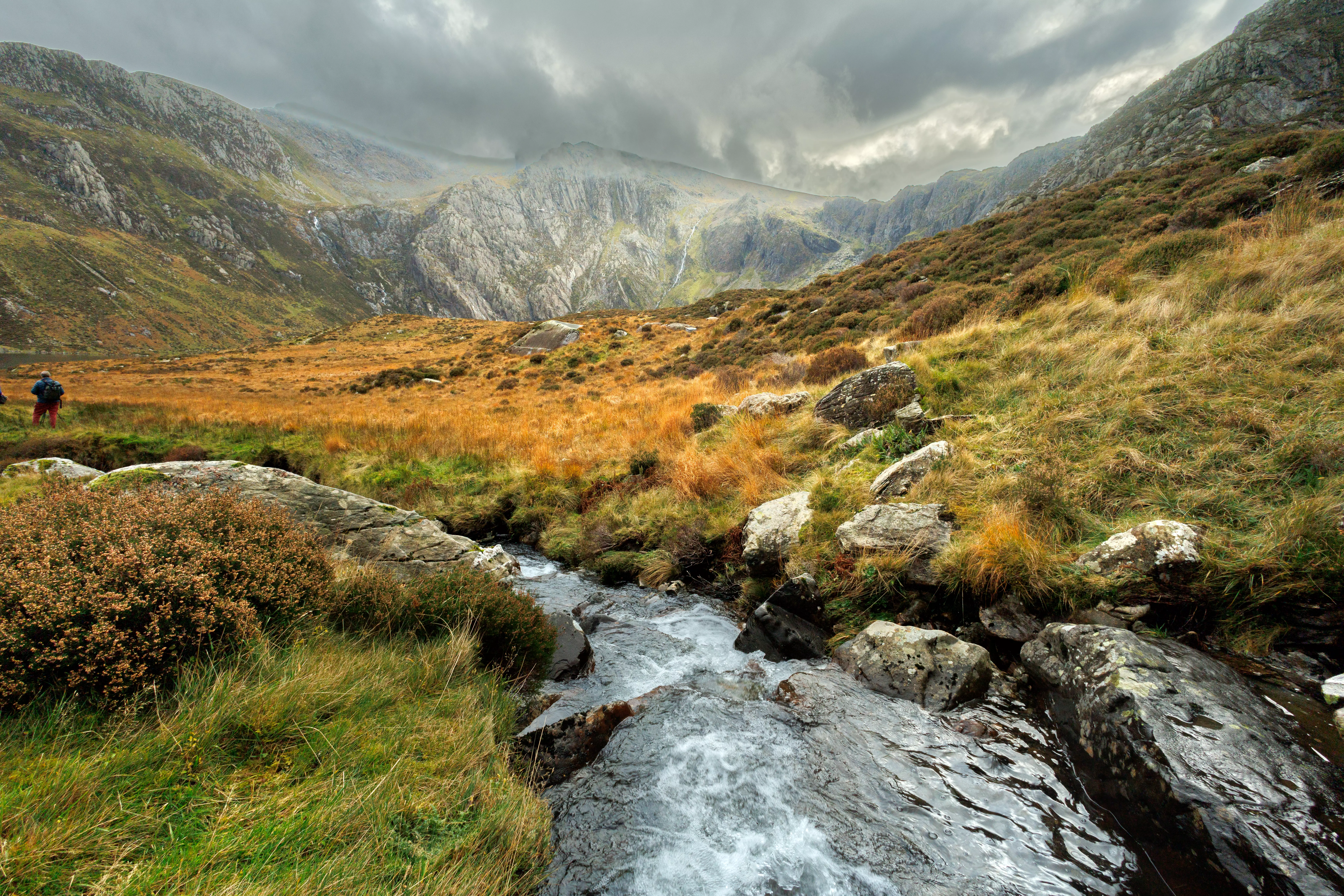
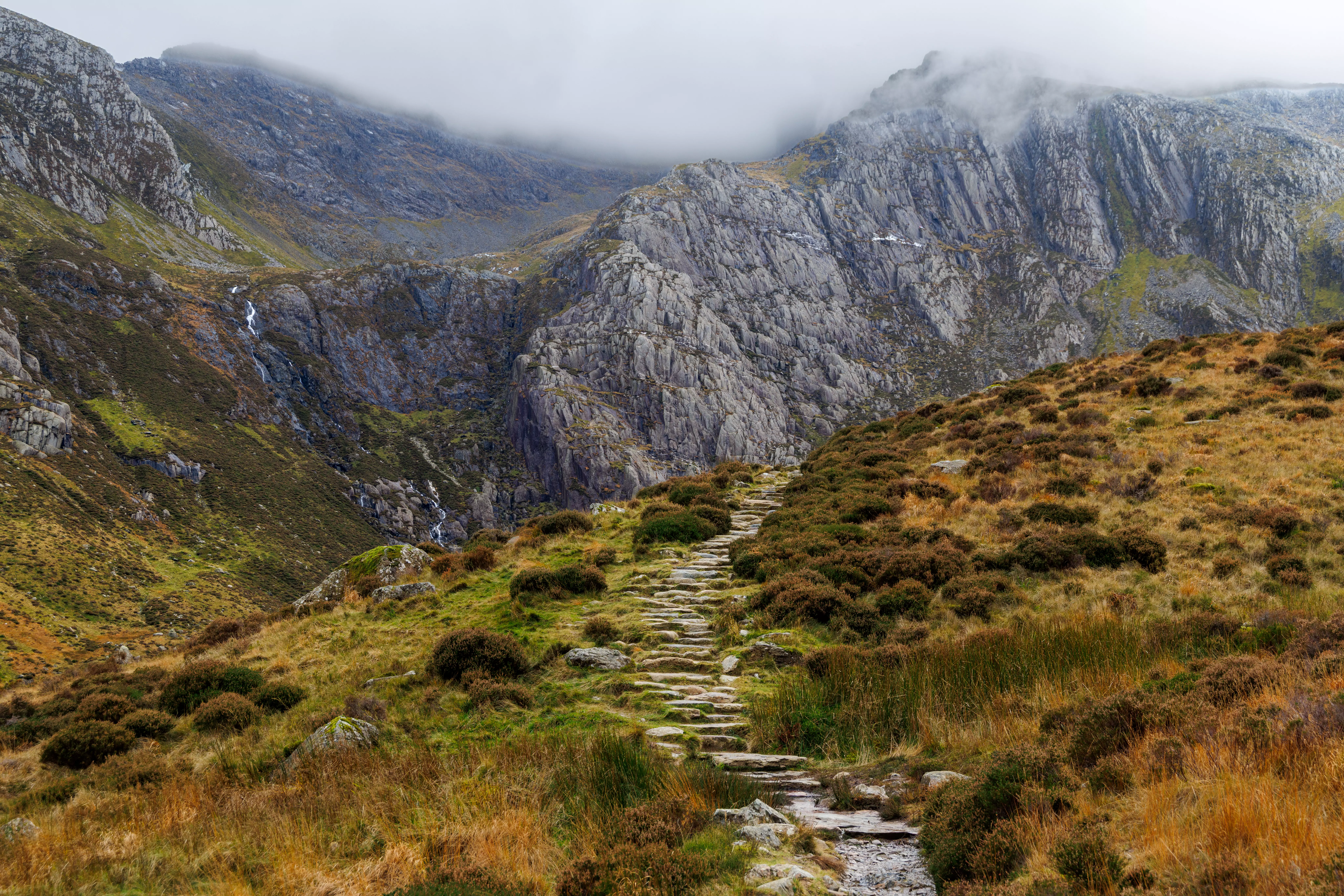
From the lake I followed the path up into Cwm Idwal, the National Nature Reserve that sits above the main valley floor. The path is well made, with stone steps in the steeper sections, but the ascent gives you a view back down through the gap that's worth stopping for repeatedly. The whole of Ogwen opens up behind you, the valley widening towards the coast, and in the foreground the Afon Ogwen runs white through its rocky channel.
Cwm Idwal itself is extraordinary. It's a classic glacial cirque, a bowl scooped into the mountain by ice, with sheer cliffs rising on three sides and Llyn Idwal sitting dark and still at its centre. The Devil's Kitchen is the deep cleft in the headwall directly ahead, and even from the lakeside you can see water threads appearing and disappearing in the rock hundreds of metres above you. After heavy rain, multiple waterfalls were running down every available crease in the cliff face. The lake reflected the whole scene back in near-perfect stillness.
The colour of the valley on this visit was superb. Late autumn in the Ogwen Valley turns the grass a deep, saturated amber, not the yellow of a summer meadow but something heavier, almost ochre, the kind of tone that shifts with every change in the light. Against the grey of the rock and the blue-grey of the lake, it was exactly the kind of natural palette you hope for but can't plan for.
I spent time working the lake from several positions, trying to find compositions where the foreground grasses, the water, the cliffs, and the sky could all sit in balance. The island just offshore from the main path made a useful mid-ground anchor in some frames. In others I moved further around the shore to bring in the full sweep of the headwall with its waterfalls. These aren't technically simple shots (the dynamic range between the bright sky and the shadowed cliffs is significant), but the Canon R5 Mark II handled it well, and the flat, diffused light of the overcast day meant contrast was already more manageable than it would be in direct sun.
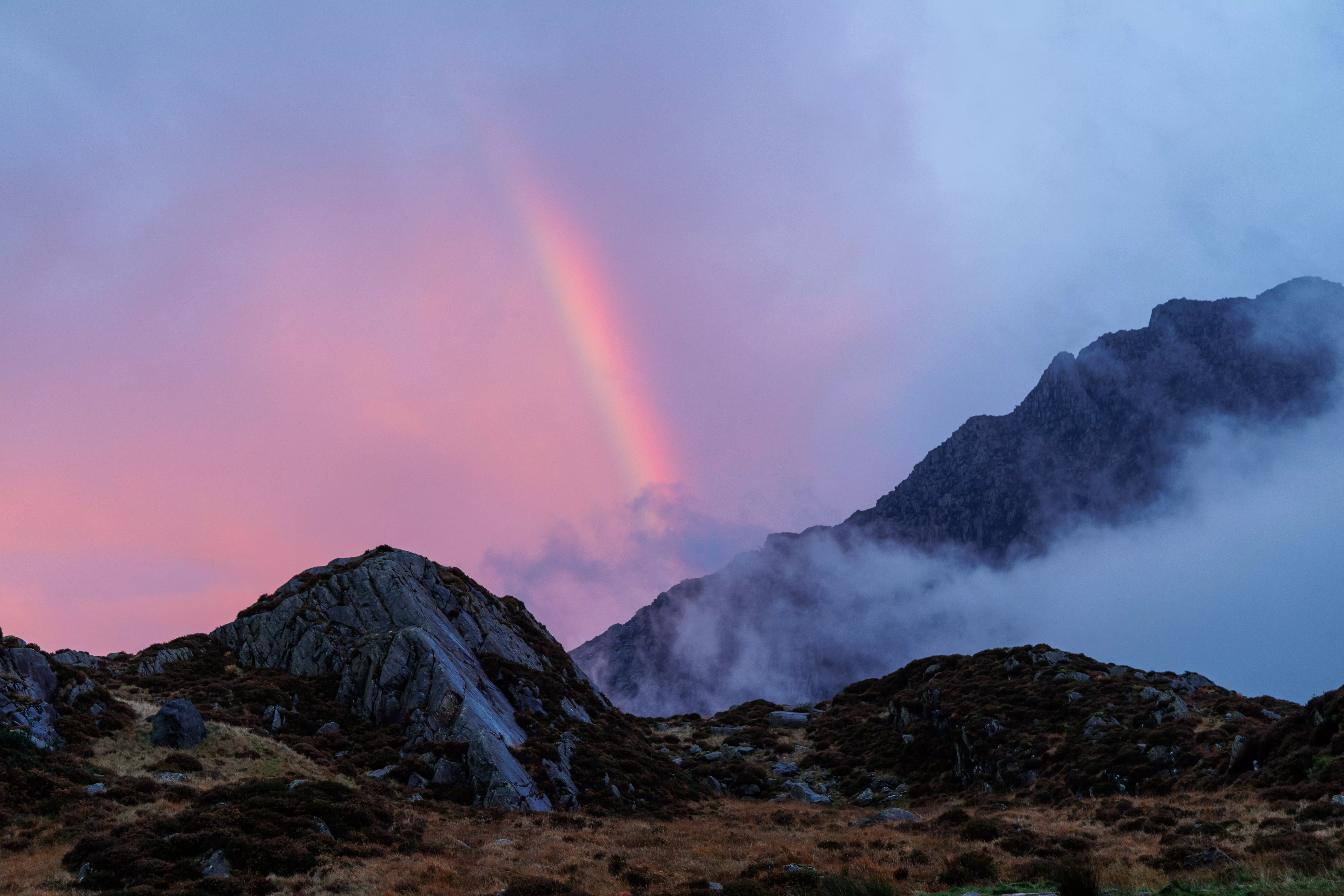
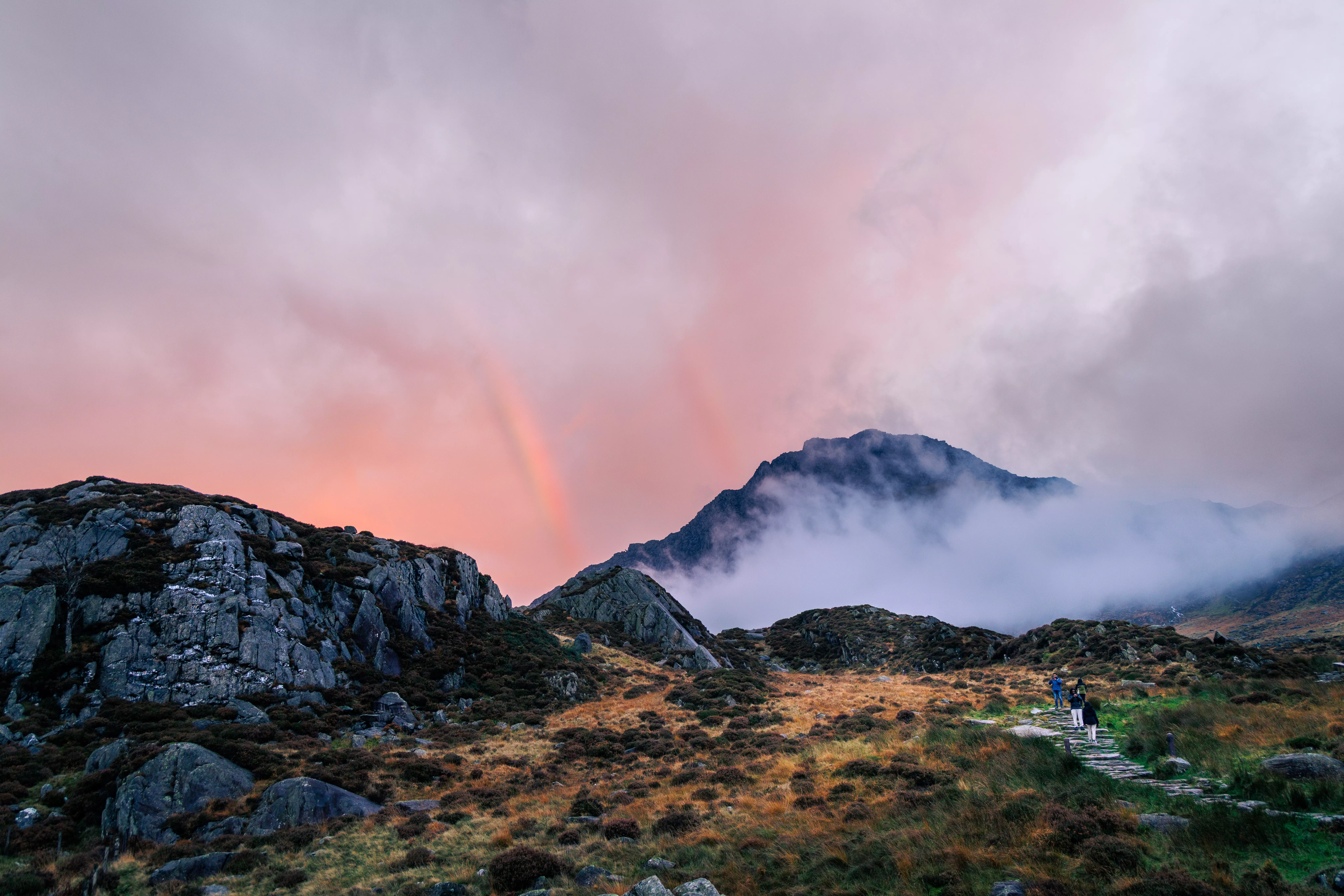
As the afternoon moved into evening, the cloud that had kept the light flat and even all day began to break up and glow. The sky behind the mountains turned orange, then deep pink, and a rainbow appeared over Tryfan, that unmistakable pyramid of rock that dominates the eastern end of the valley. The combination of the dusk sky, the mist rolling off the summits, and the rainbow against the pink light was the kind of thing you don't anticipate when you're packing your bag in the morning. I stayed until the colour had faded completely.
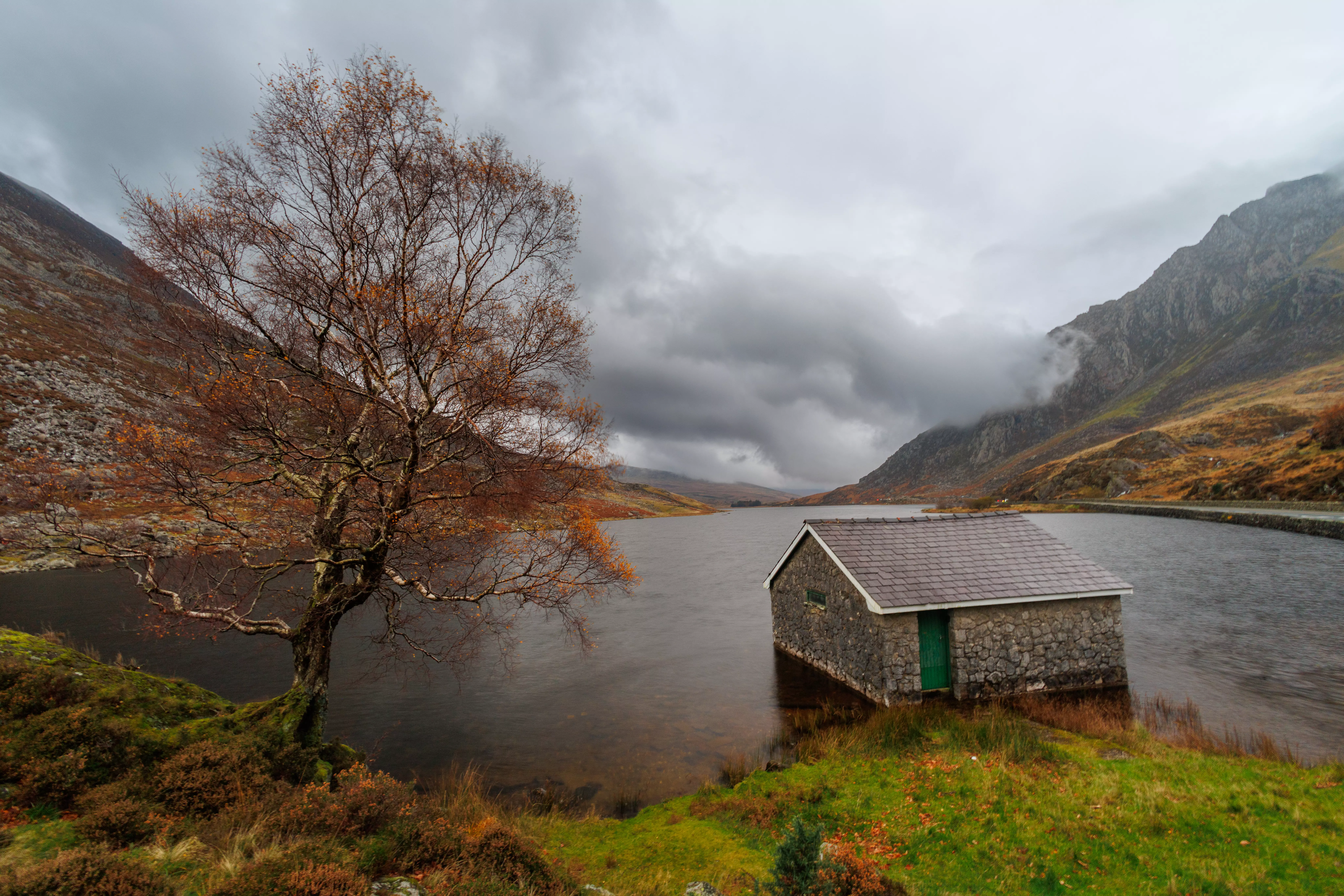
The boathouse on the shore of Llyn Ogwen was a final shot before I walked back to the car. A simple stone structure with a green door, sitting half in the water, an autumn birch arching over it, storm clouds still moving across the valley. It's the kind of subject I'm always drawn to: something made by human hands slowly being absorbed back into the landscape around it.
The Ogwen Valley rewards slow movement and frequent stops. There's always something to look at, and the conditions change constantly. If you're planning a visit, give yourself a full day rather than a half. Walk up into Cwm Idwal if you can. Llyn Idwal is worth the walk on its own. And keep shooting into the evening if the sky shows any sign of doing something. In Wales, it usually does.