Iceland Photography, 2020-2021
Two winter trips along Iceland's south coast, in 2020 and 2021, which between them covered the road from Keflavík out east to Stokksnes and back to Reykjavík. In winter the sun never climbs very high, so the landscape is lit from the side for most of the day and the snow picks out every ridge and gully. It's the best light I've ever had for mountains, and it lasts for hours rather than minutes.
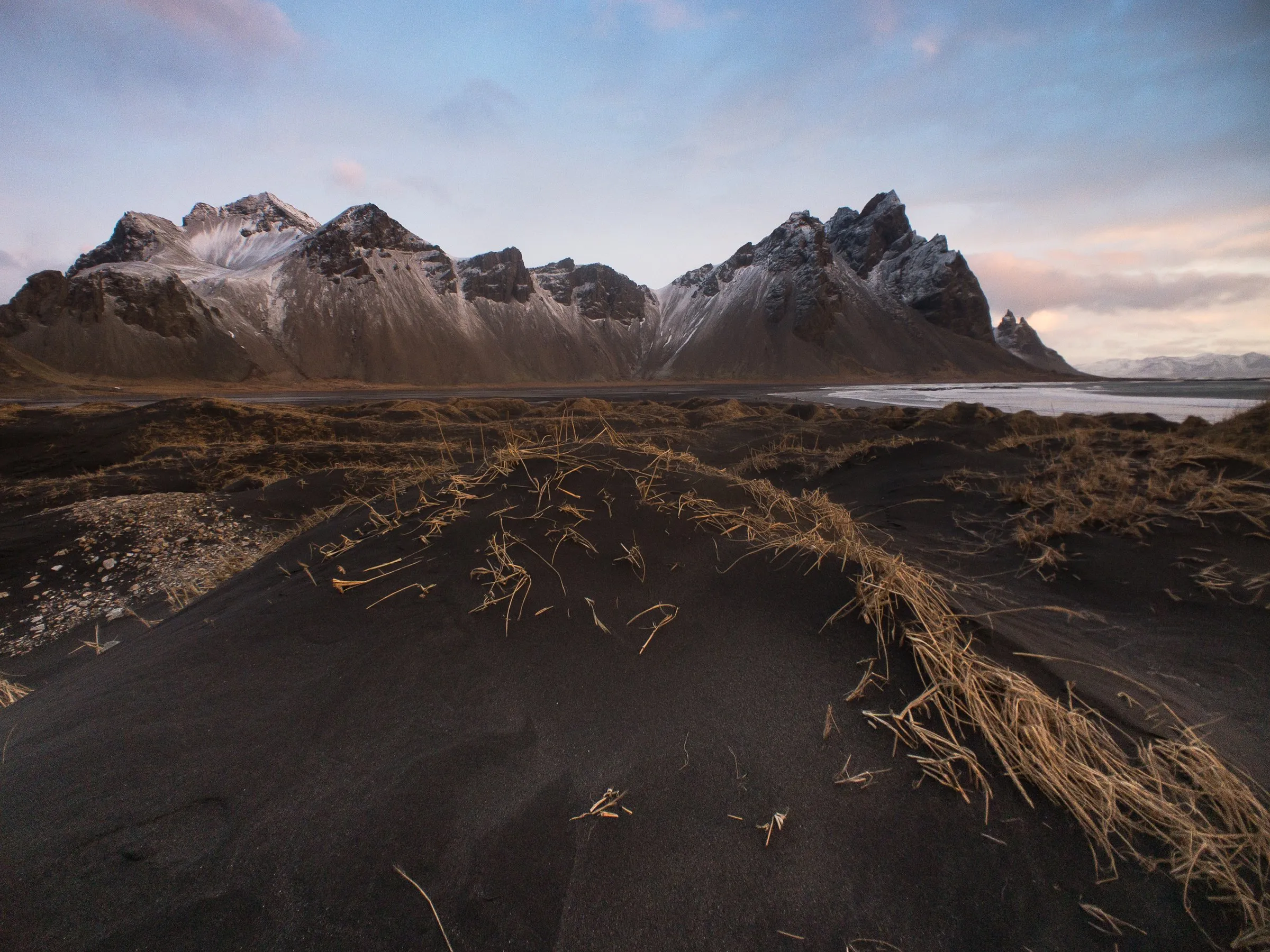
Stokksnes and Vestrahorn
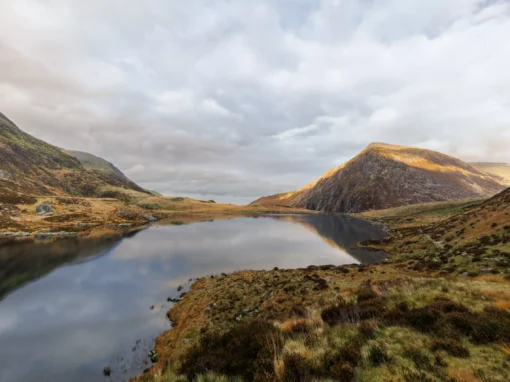
On the first trip we were up at 5.30am to be on the beach at Stokksnes for sunrise. Vestrahorn rises straight up behind the black sand dunes, jagged and dusted with snow. You reach the beach through a barrier by the Viking Café, where you pay for a pass, and the old Viking Village film set is a short walk away.
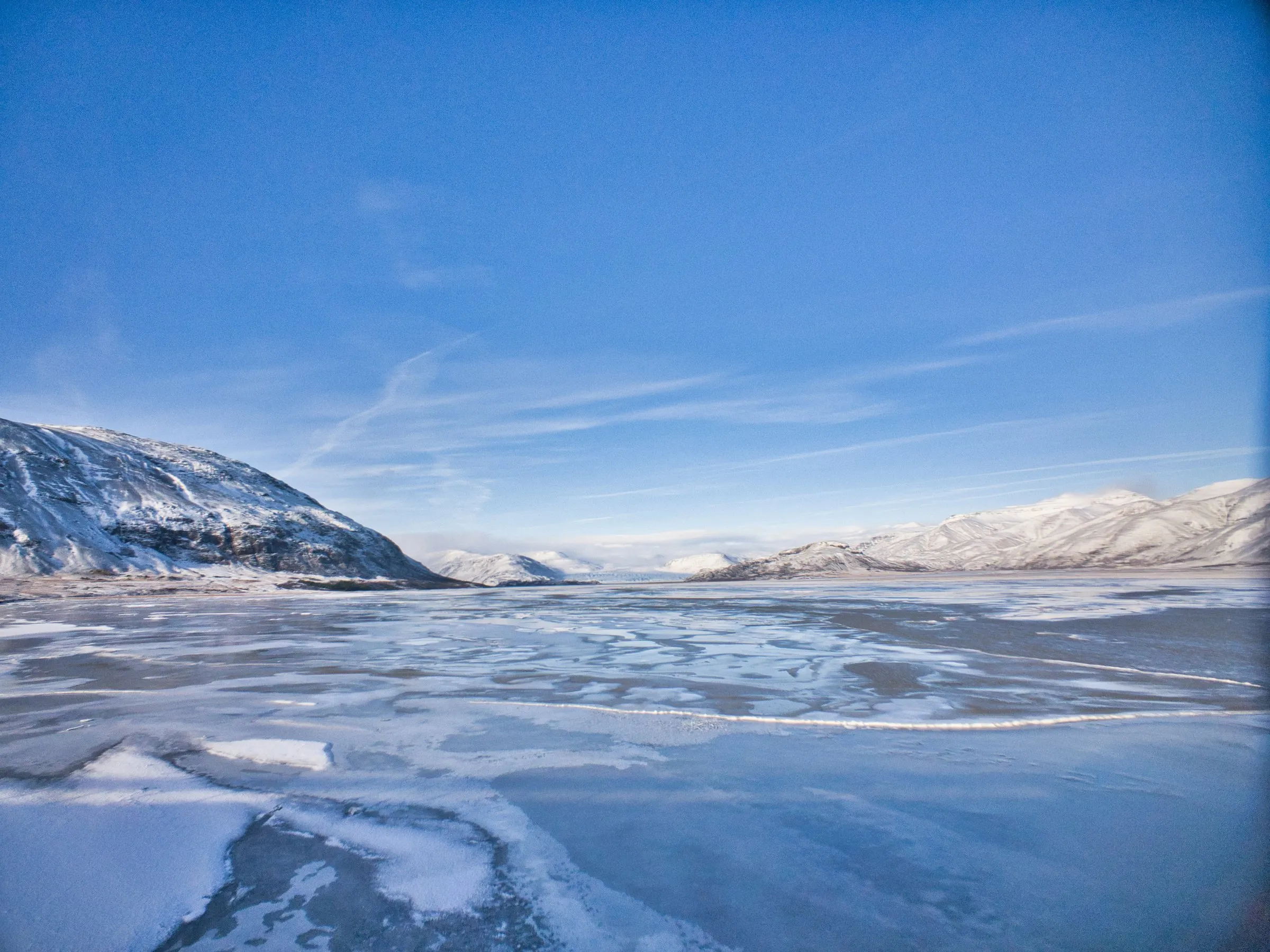
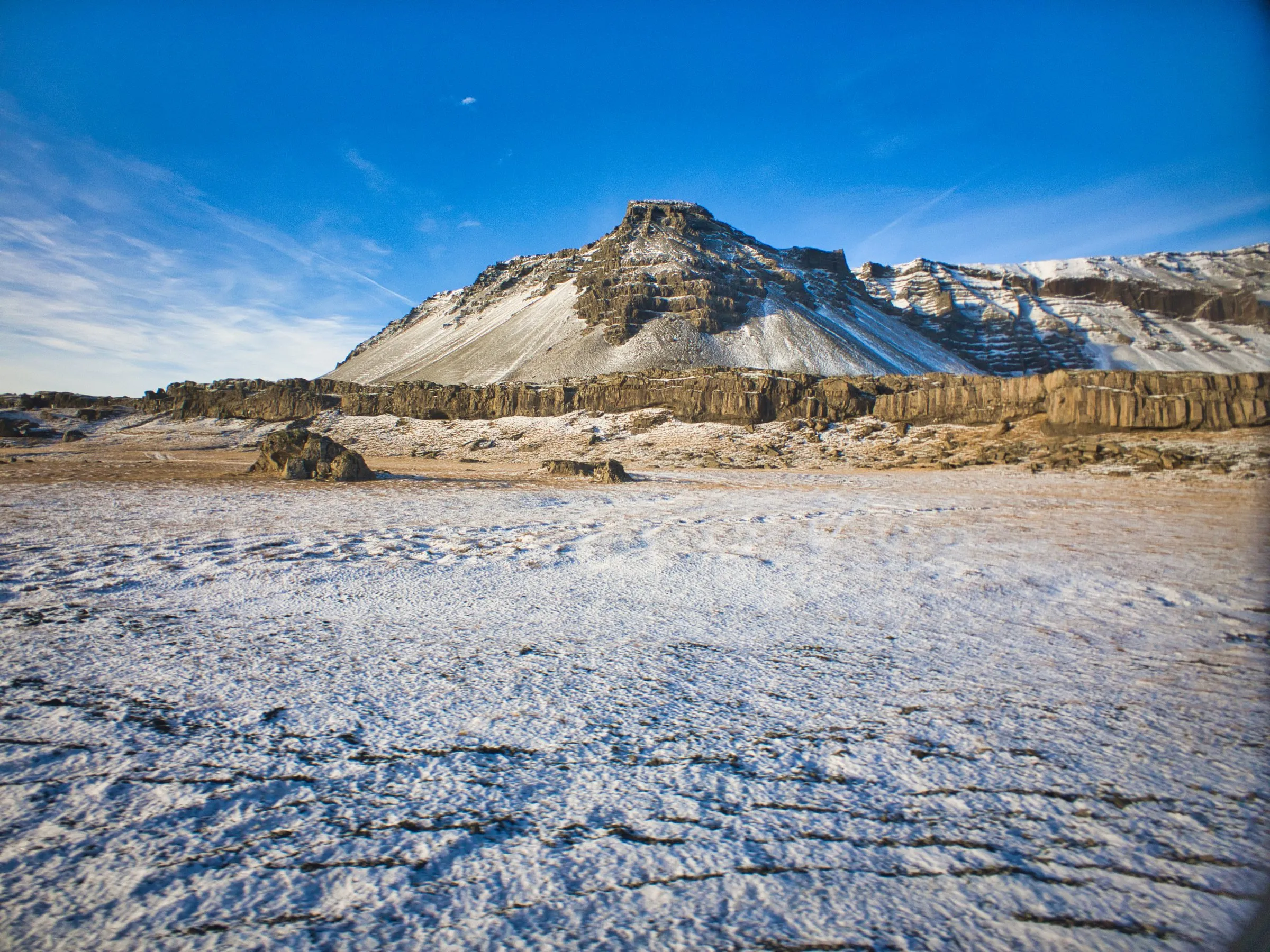
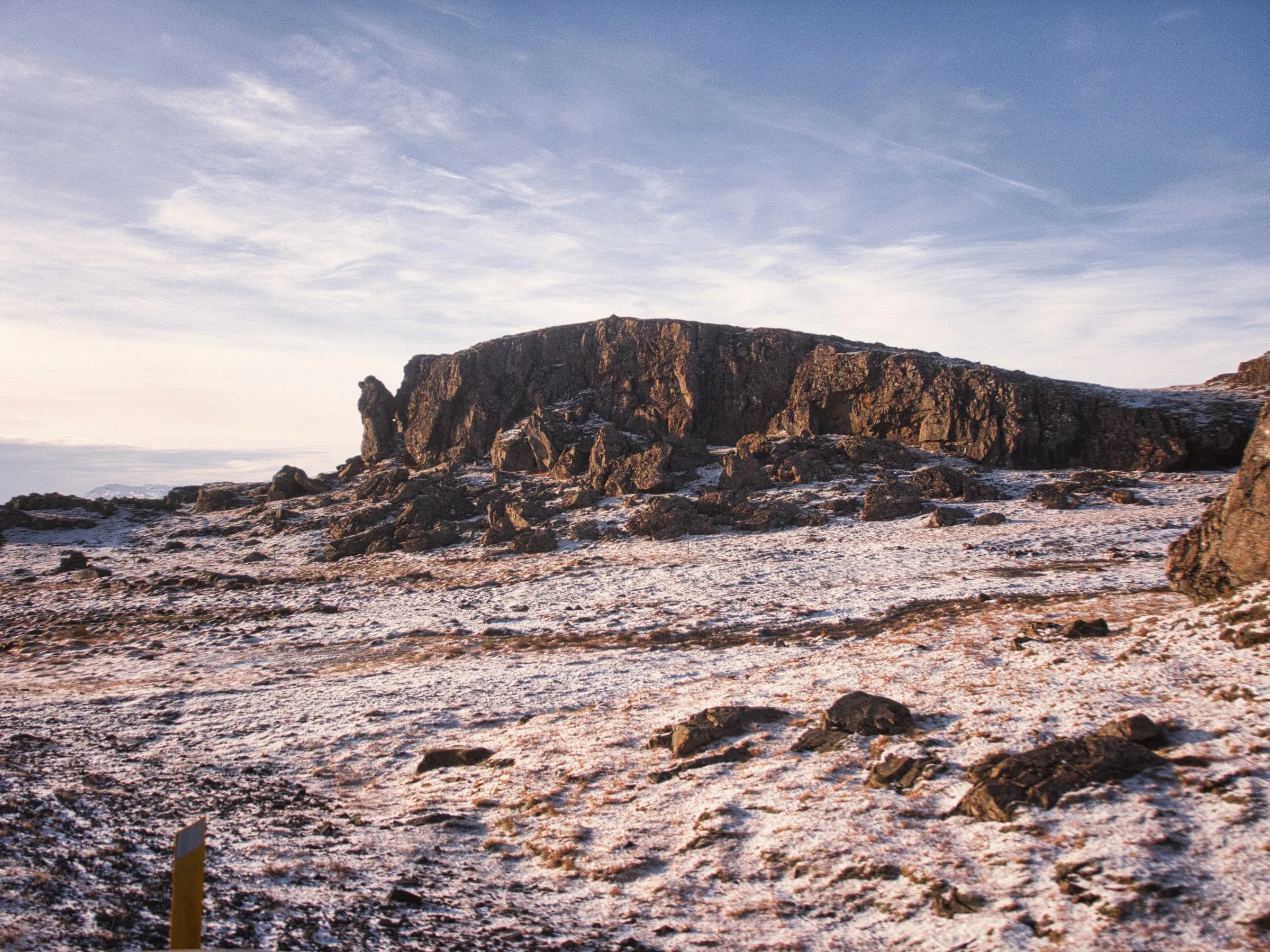
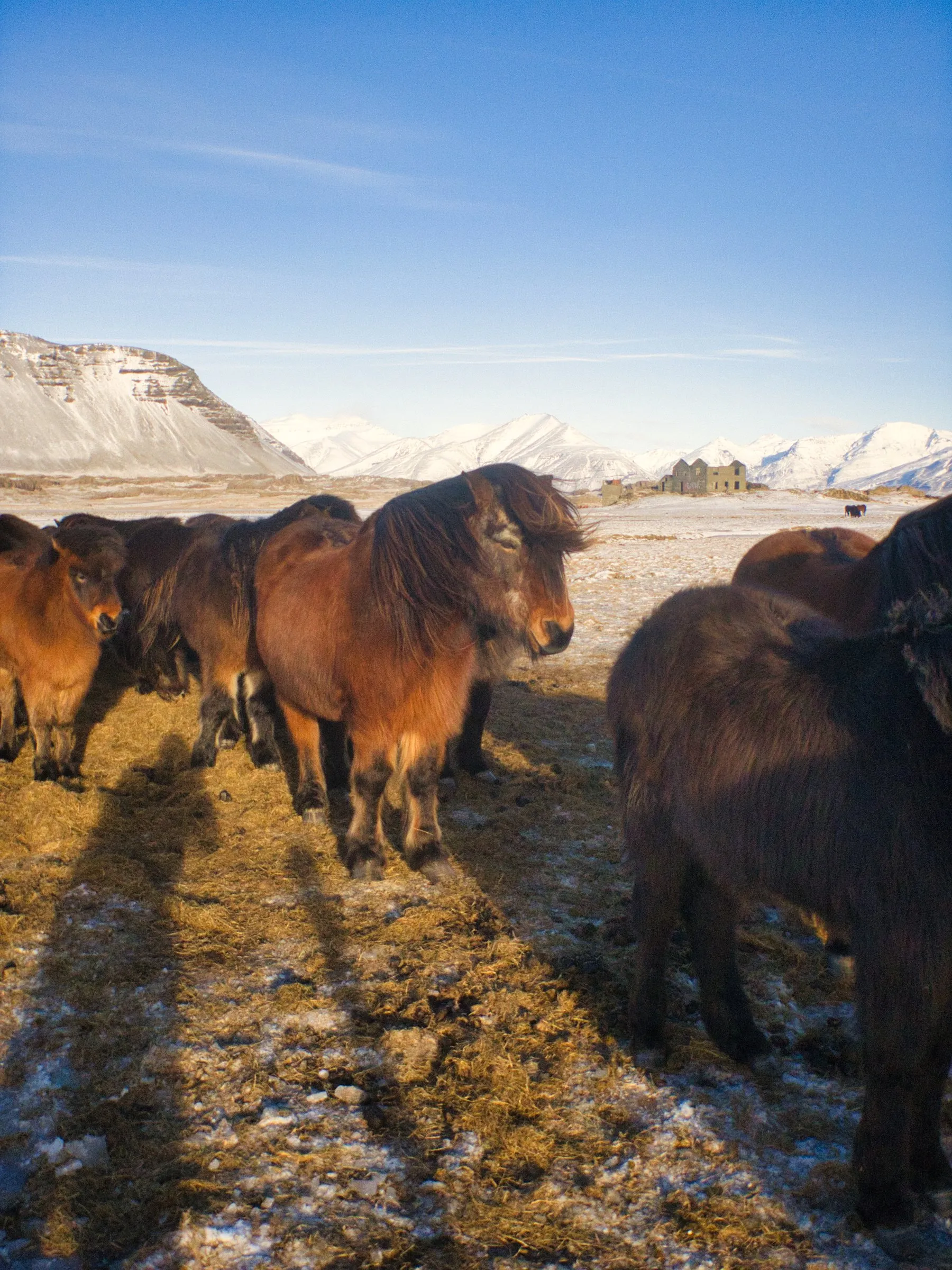
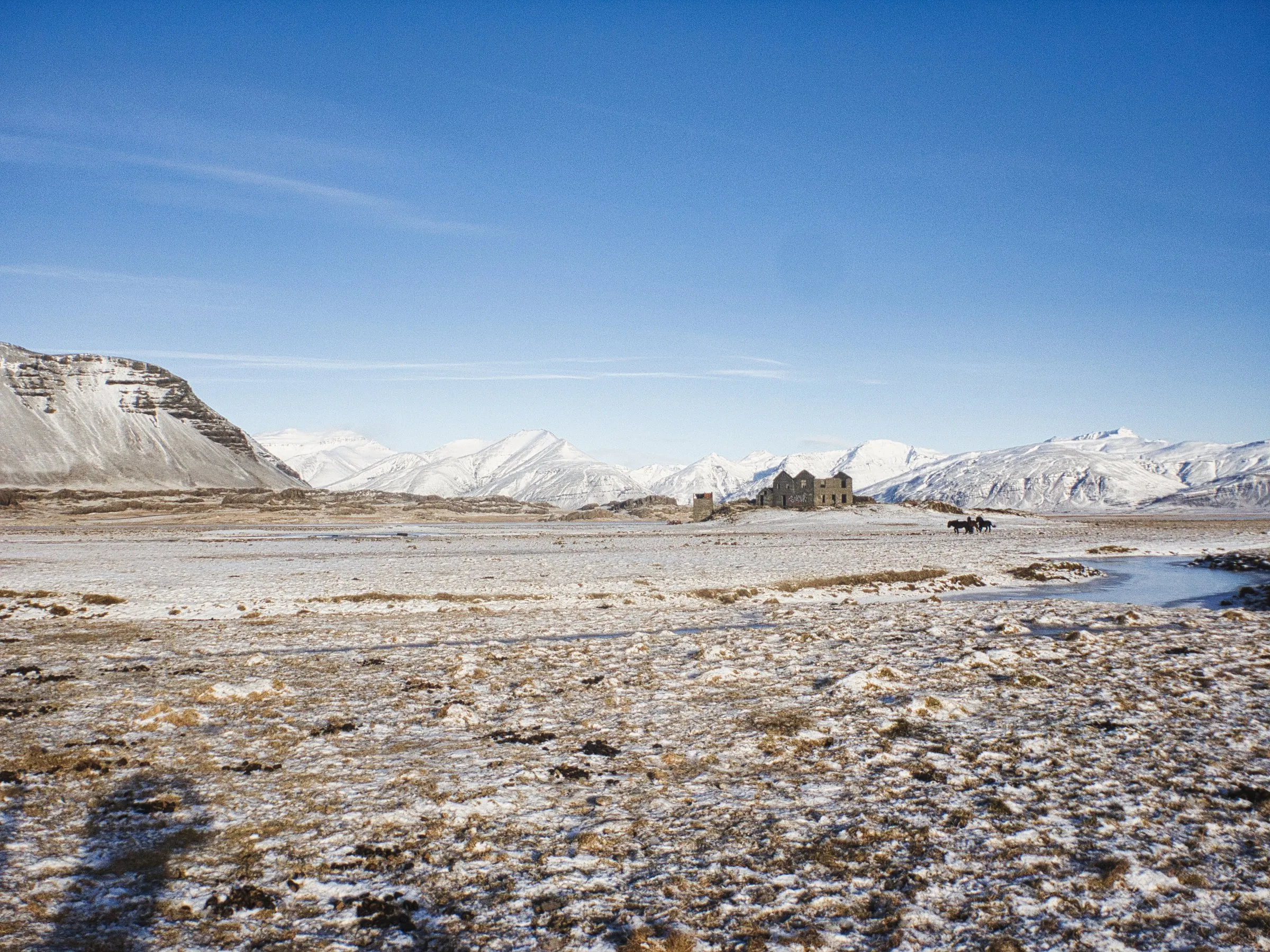
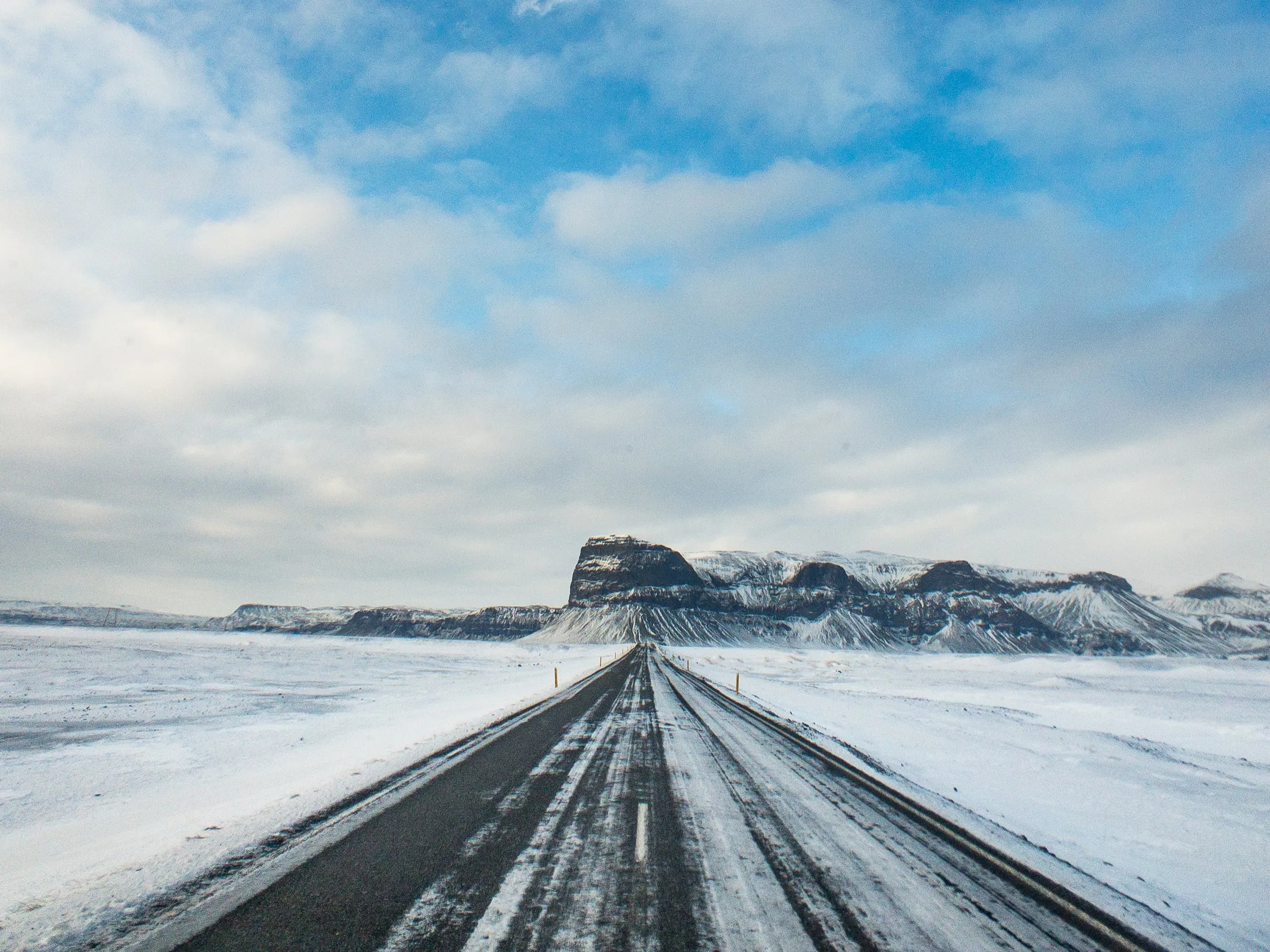
The road either side barely lets up. A frozen fjord under snow-capped mountains, basalt cliffs catching golden light, and a flat-topped volcanic tuya standing alone against a clear sky. Icelandic horses gathered near an abandoned stone farmhouse, their thick winter coats catching the low sun with the mountains rising behind them.
Glaciers and ice
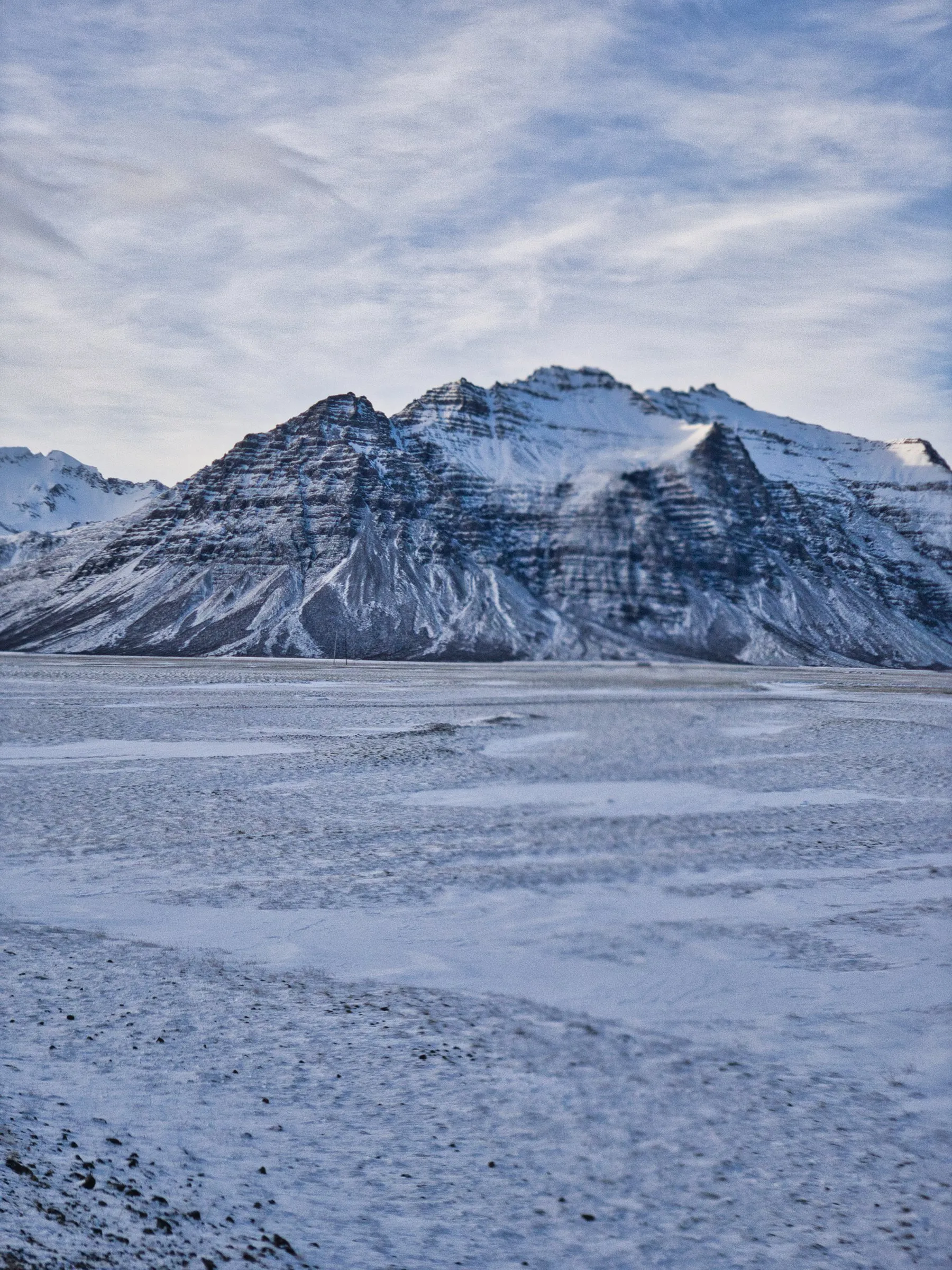
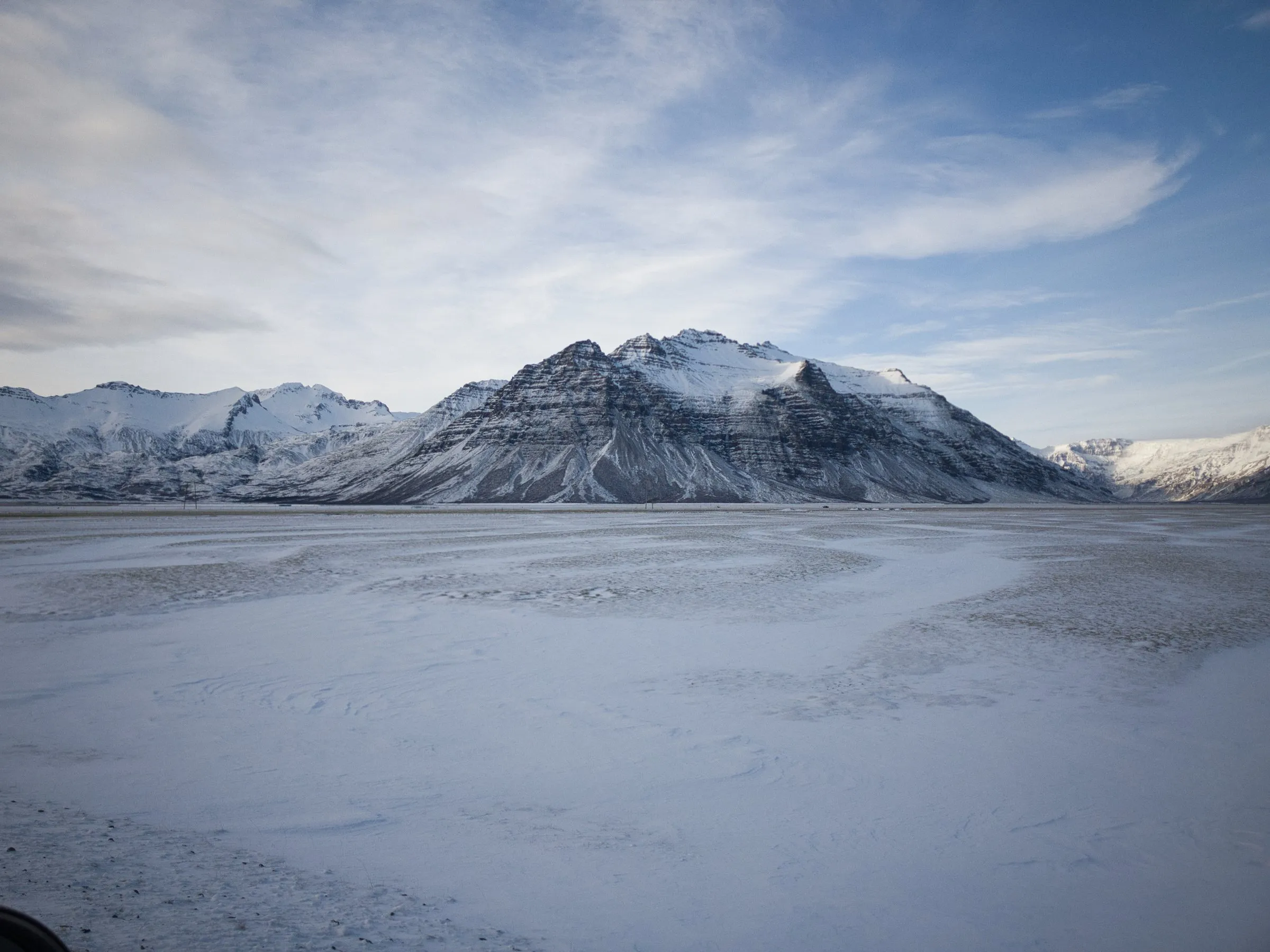
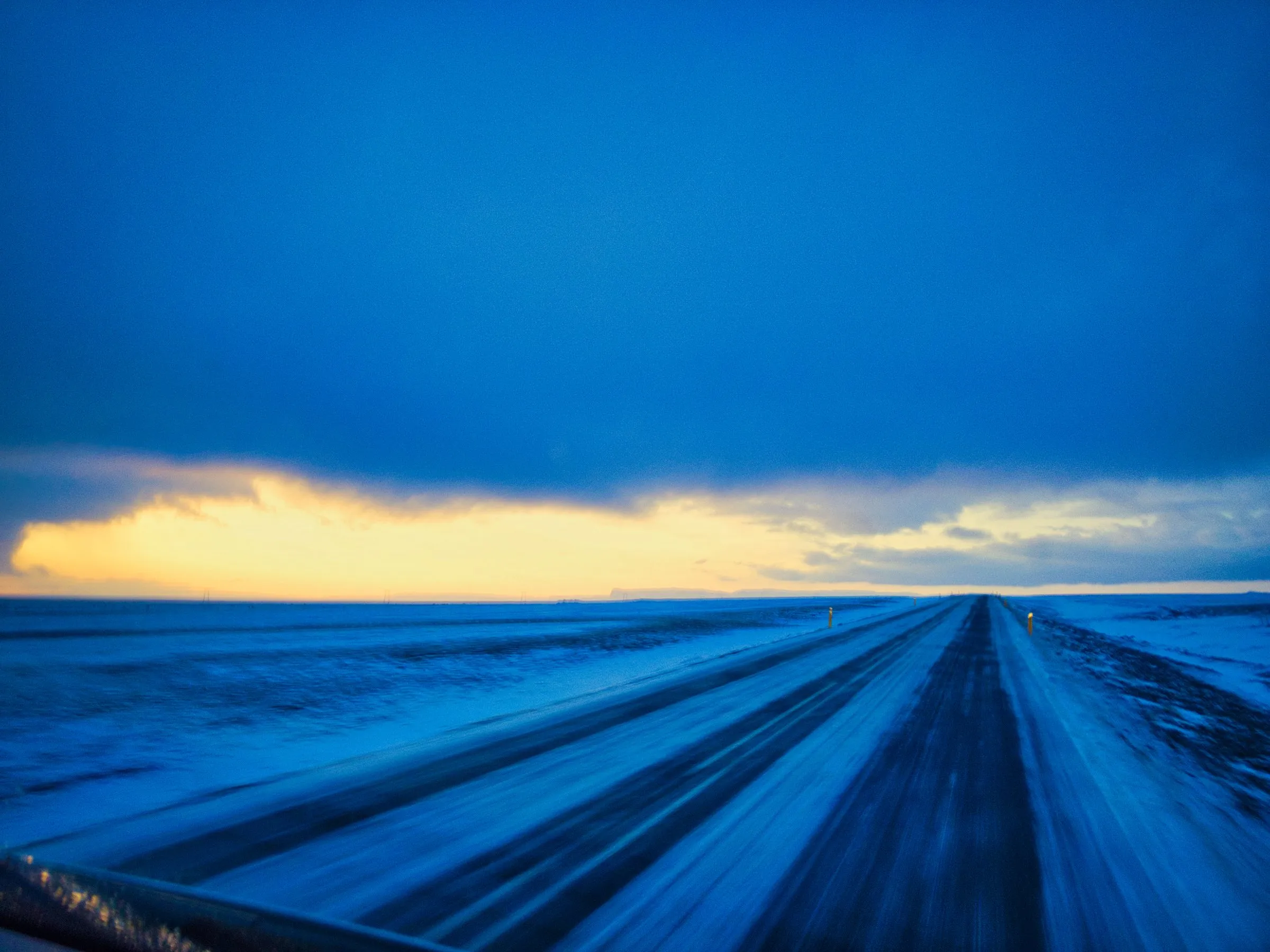
Further along came a striated mountain range and a glacier tongue under storm cloud, then a dusk drive with a last band of gold under a dark blue sky.
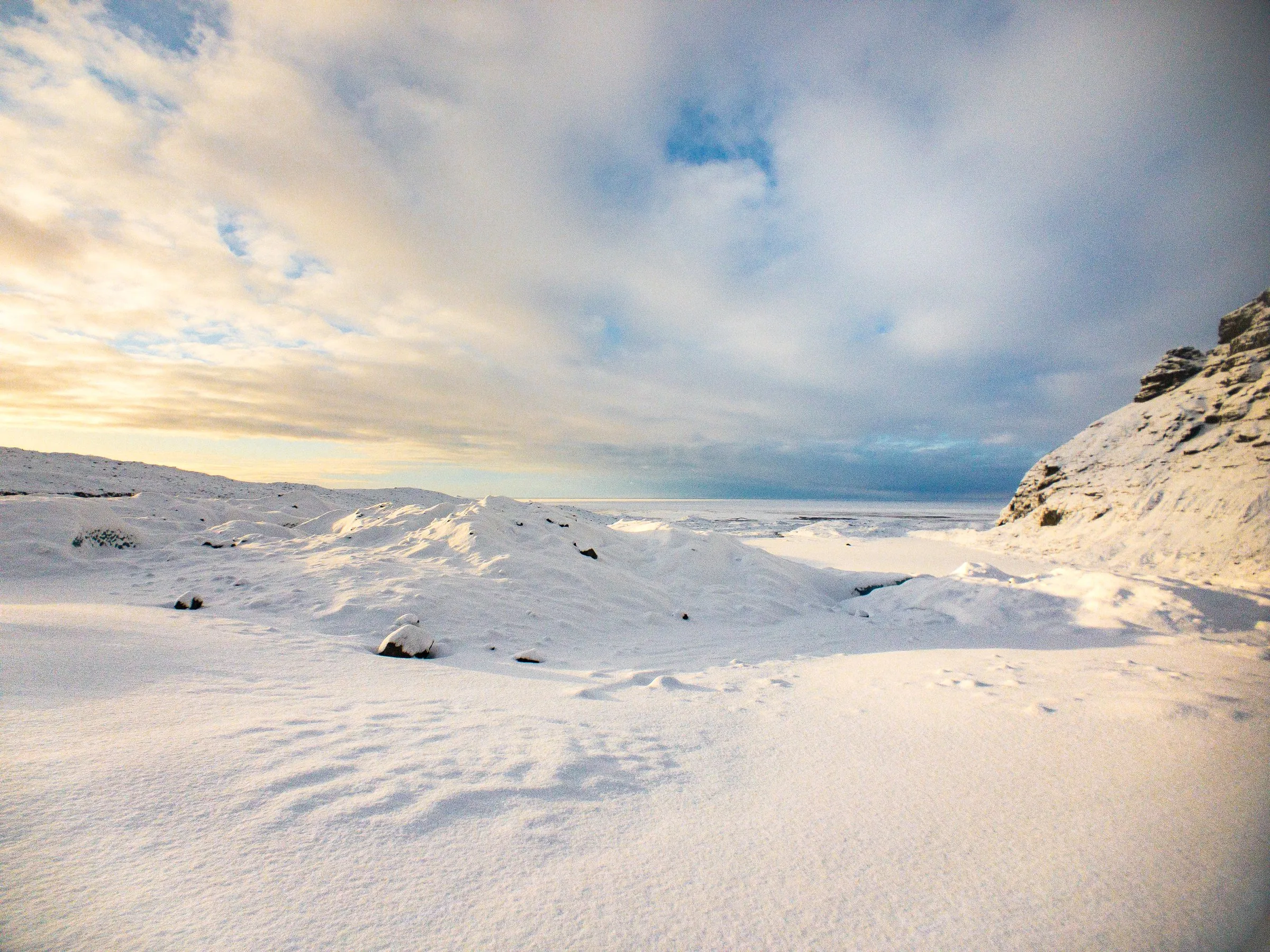
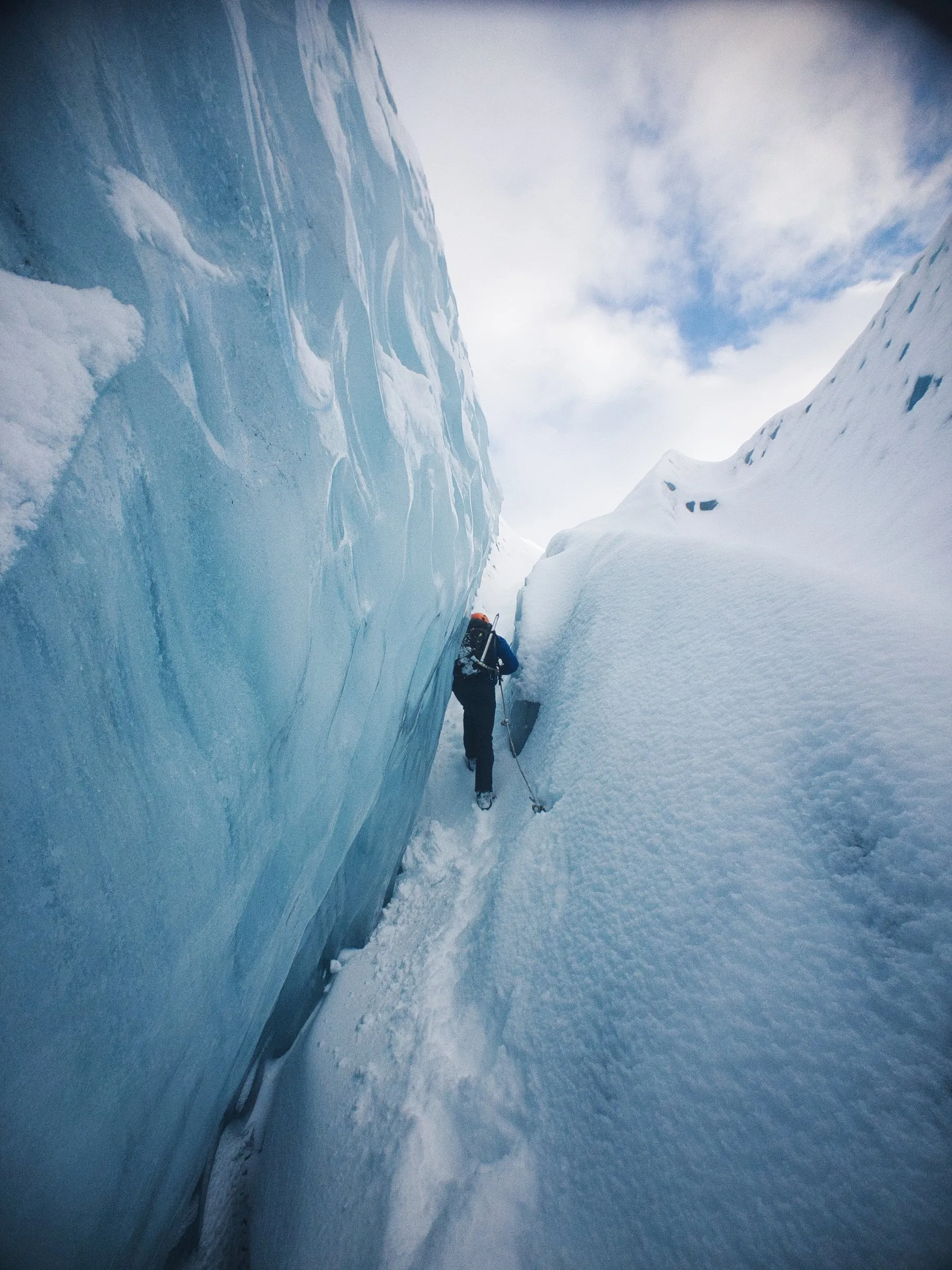
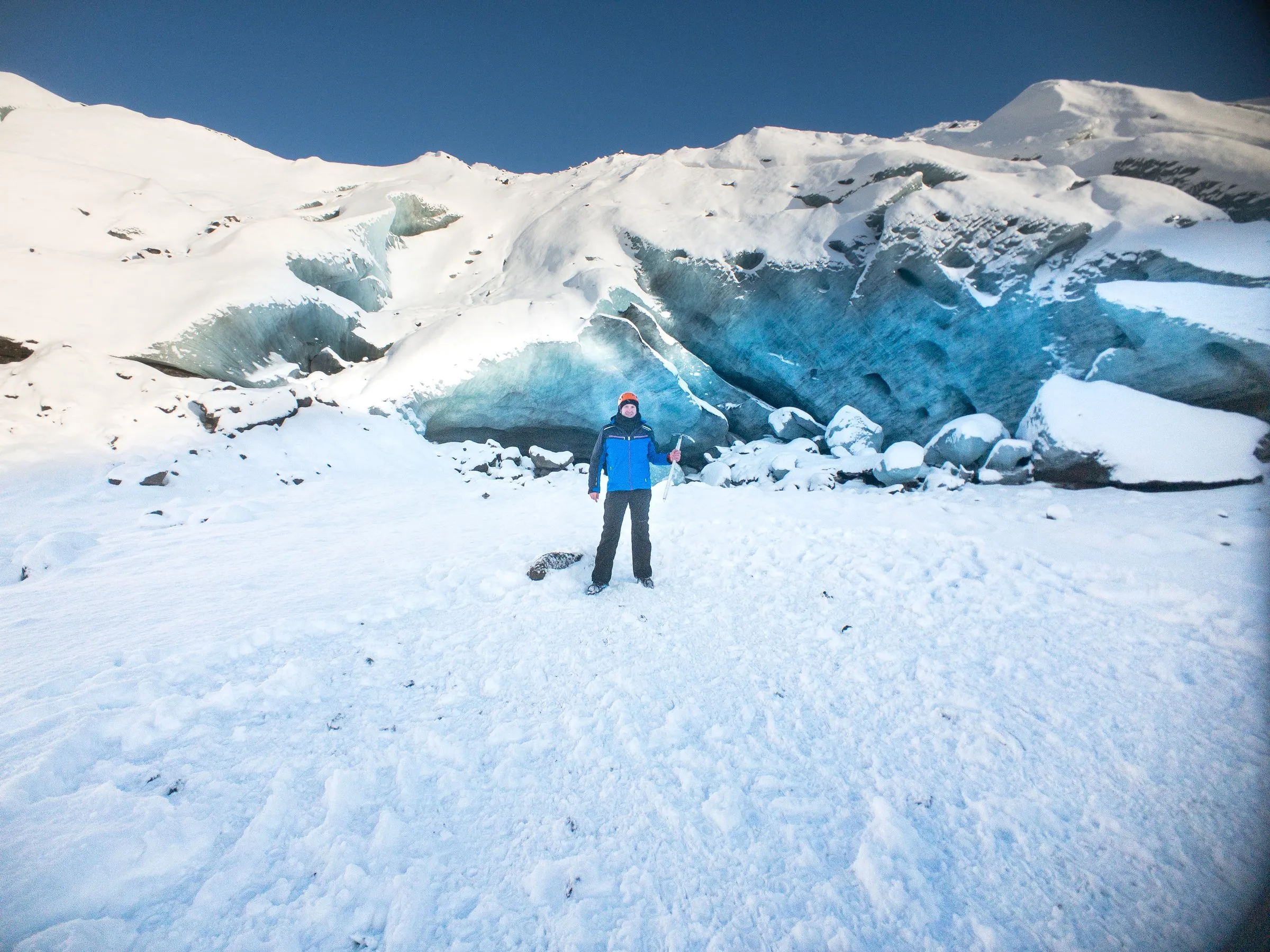
Up on the ice itself, with a glacier guide, there was a wide glacier valley, a climb into a blue-walled ice cave, and a crampons-and-ice-axe hike across the glacier's crumpled surface. Iceland's ice caves form where meltwater runs through or under a glacier, and they're only safe to enter once winter has frozen them solid. Most change from year to year, so the guides have to find new ones each season. The cave in these photos has almost certainly gone now, which makes them feel a bit more precious.
Fjaðrárgljúfur and Vík
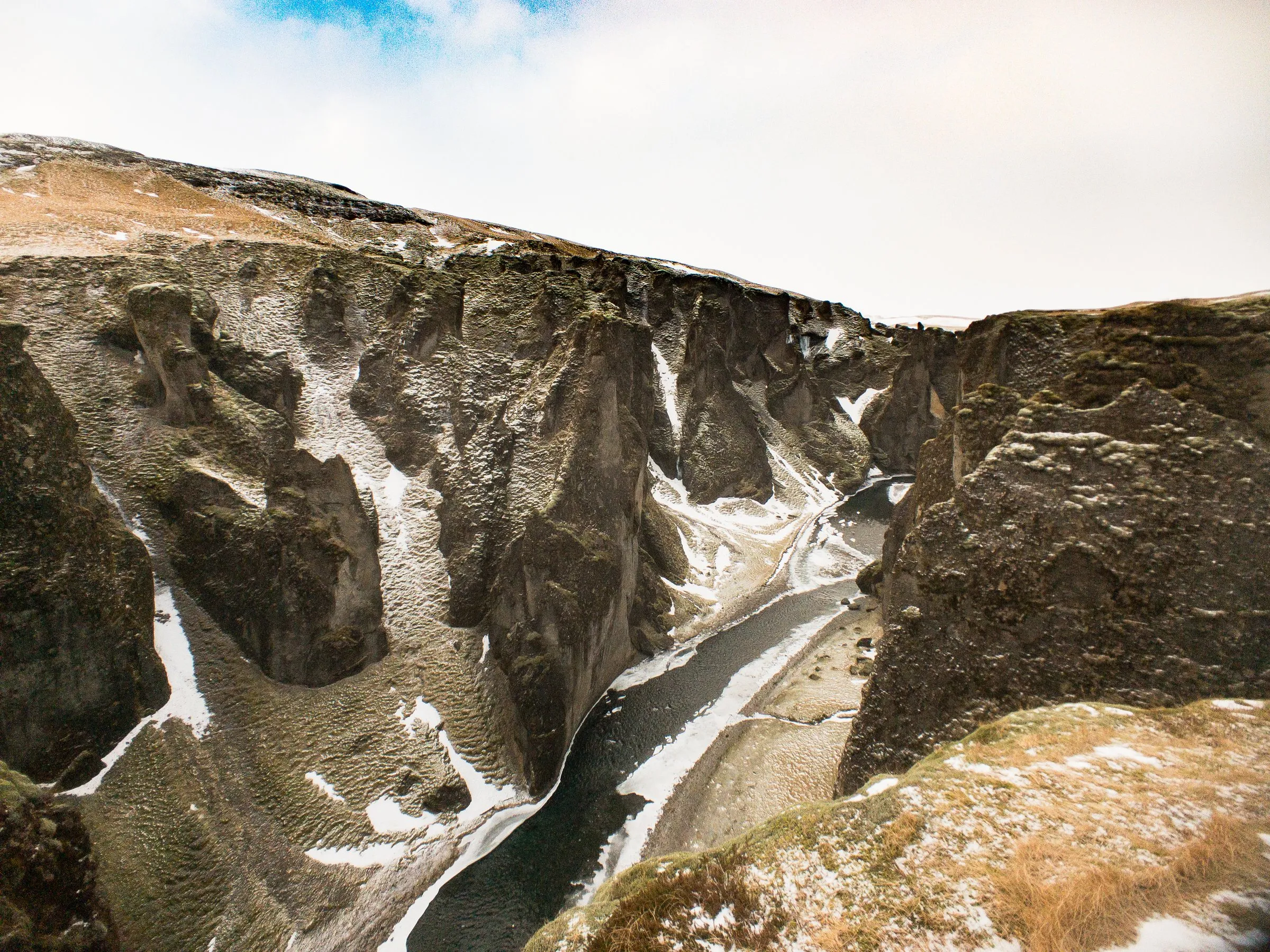
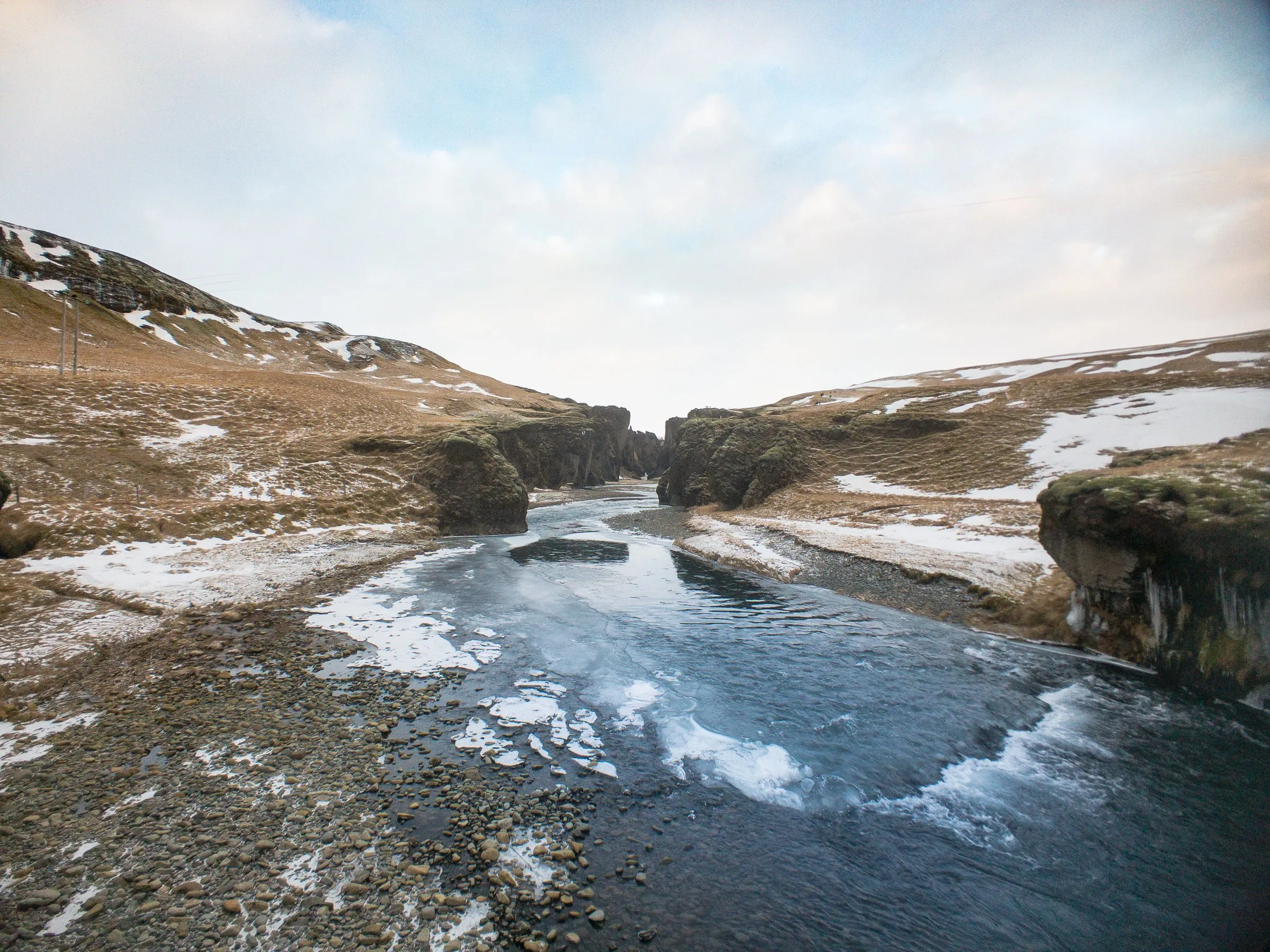
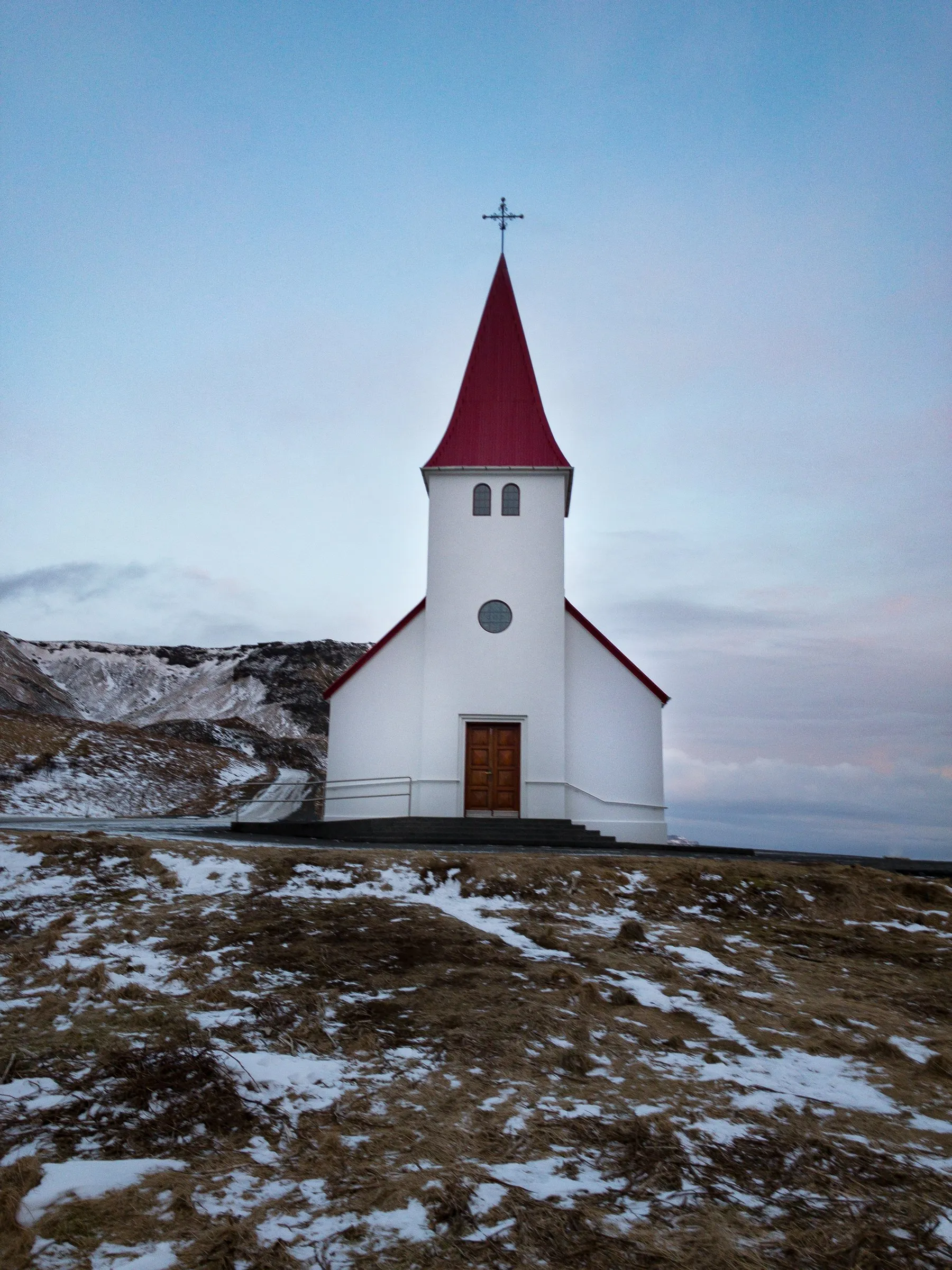
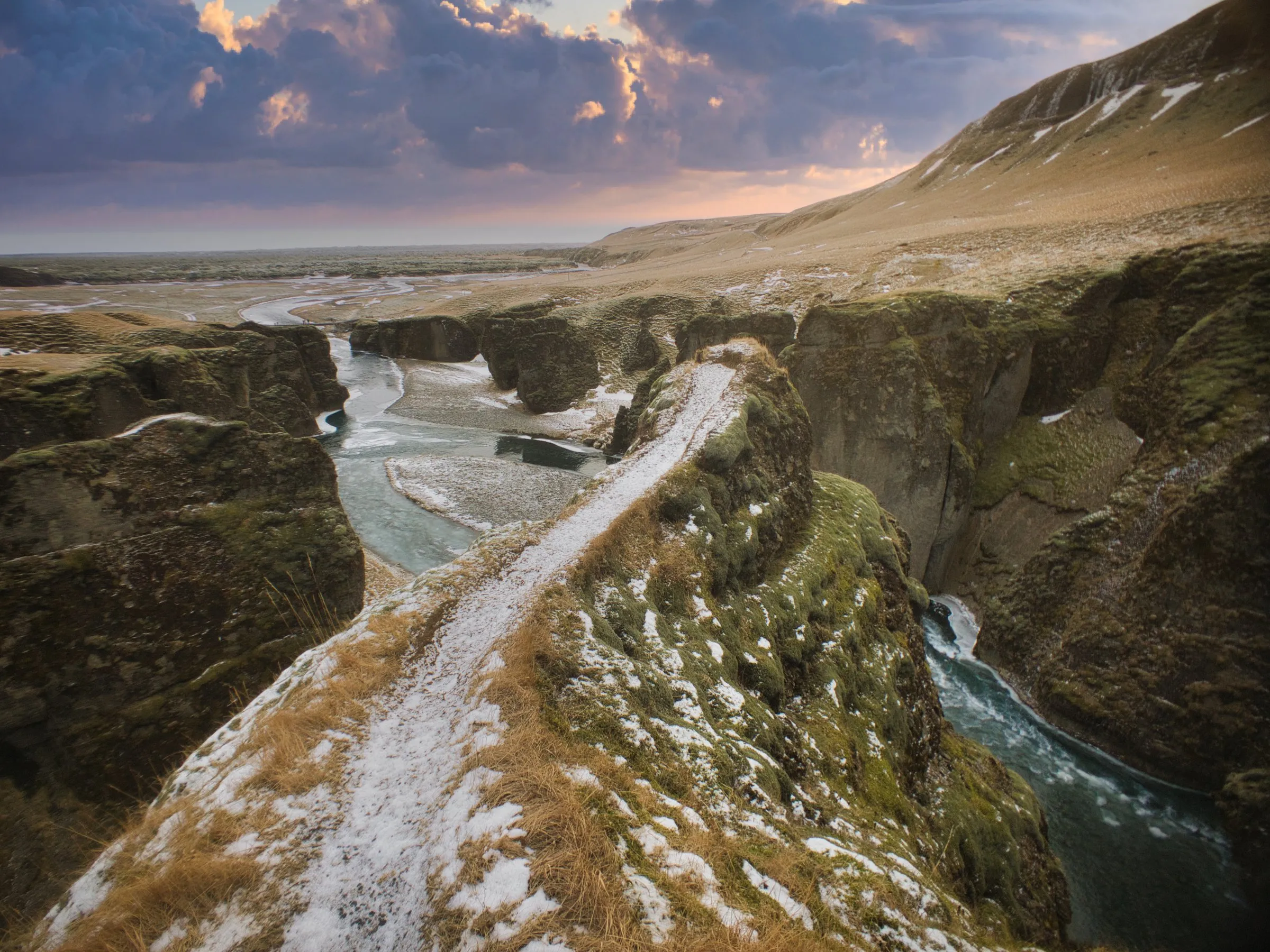
Fjaðrárgljúfur canyon was one of the highlights. A short walk up the rim gives you the view down over the looping river and the steep, moss-covered walls, which drop up to 100 metres in places. We had it under a pink and gold sunset. From there it was on to Vík, where the red-roofed church of Reyniskirkja stands on the hill above the village and the black-sand coast.
The waterfalls
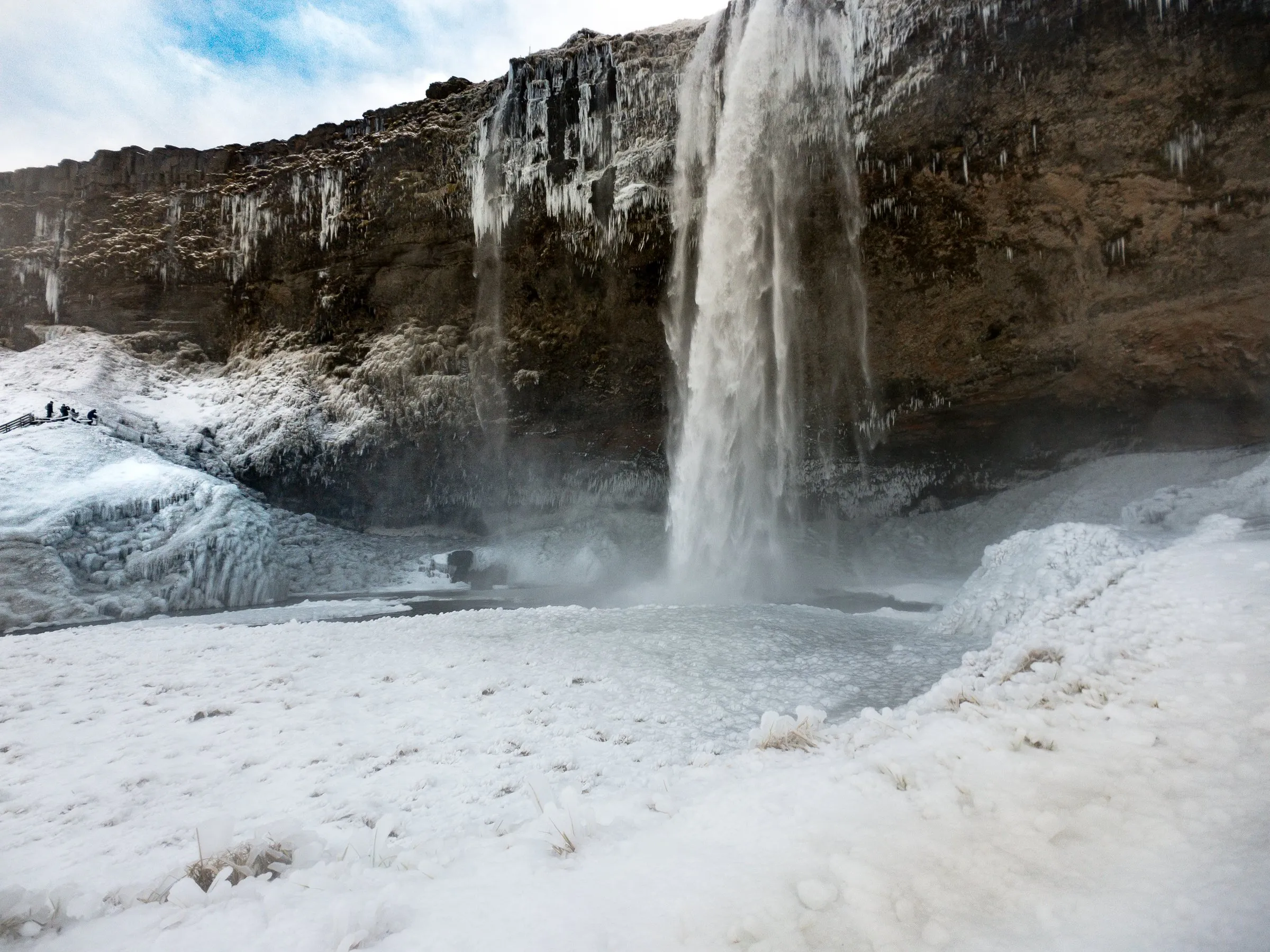
Further west are Skógafoss and Seljalandsfoss, its spray frozen onto the cliff face but the fall still roaring with meltwater in the depths of winter. In winter the path behind the falls is usually too icy to use, so the view is from the front. On the last day of the 2020 trip a storm was heading for the coast, so the afternoon turned into a dash past Strokkur and Gullfoss before we took shelter in Reykjavík for the night.
Shooting Iceland in winter
The days are short, but because the sun stays low, the good light goes on far longer than it does at home. Check the road conditions on umferdin.is and the weather warnings on vedur.is every morning. A storm warning changed our plans on that last day, and I'd do the same again. If you go to Reynisfjara, stay well back from the water. Sneaker waves there have killed visitors, and a warning light by the path tells you how risky it is that day.